
Fraud detection is the process of identifying potentially fraudulent payments before or shortly after authorisation, usually using a mix of rules and machine-learning models. Signals include device, behaviour, BIN, velocity, geolocation, AVS, CVC and authentication results. The output is a decision to approve, challenge, hold for review, or decline.
Travel payments glossary
Fraud detection
The process of identifying potentially fraudulent payments before or shortly after authorisation.
Why it matters in travel
Travel fraud has its own patterns: card testing on low-value deposits, account-takeover on familiar brands, friendly fraud post-trip. A detection layer that does not know about booking context — deposit versus balance, agency versus consumer, departure date — will either miss real fraud or block legitimate customers.
A generic fraud engine does not know that a £30 booking on a popular OTA is being card-tested, or that a high-value balance paid two days before departure is normal travel behaviour. Without travel context, the engine over-blocks or under-blocks — and either failure shows up as direct financial cost. The teams that get this right give the engine the booking context to work with.
The travel businesses with mature fraud-detection programs read outcomes back into the engine continuously: which blocks were right, which were wrong, which approvals turned into chargebacks. The businesses that set rules once and never revisit them quietly drift out of step with the threat model as fraud patterns evolve.
How felloh helps
felloh surfaces fraud signals alongside booking context so the next decision is informed by the whole picture, not just the payment in isolation.
The Transactions and Risk Analysis views in the dashboard surface fraud signals — BIN risk, AVS mismatches, repeated authentication failures, behavioural anomalies — against the booking. Where a pattern emerges (card testing during a flash sale, repeated friendly fraud after a destination, account takeover on a particular brand), the booking-level evidence makes the response specific rather than blanket.
For fraud teams operating across multiple brands and acquirers, the detection layer learns from booking-level outcomes — captured, settled, refunded, disputed — rather than from logs. False-positive rates drop, false-negative rates drop, and the team spends time on the genuinely suspicious cases instead of triaging noise.
Where this shows up in risk and disputes.
Fraud detection touches more than one workflow at felloh. Start with the pages most travel teams reach for next.
- Financial Control
Control refunds, exceptions, supplier exposure and payment risk against the same booking record.
Explore - Financial Protection Data
Authentication, settlement, protected funds and refund history kept with the booking for dispute defence.
Explore - Payment Optimisation
Acceptance, decline and authentication evidence so you can act on the patterns that matter.
Explore
More on payment risk and disputes.
Real-world context from the felloh team and customers, written for travel finance and operations.
 Updates
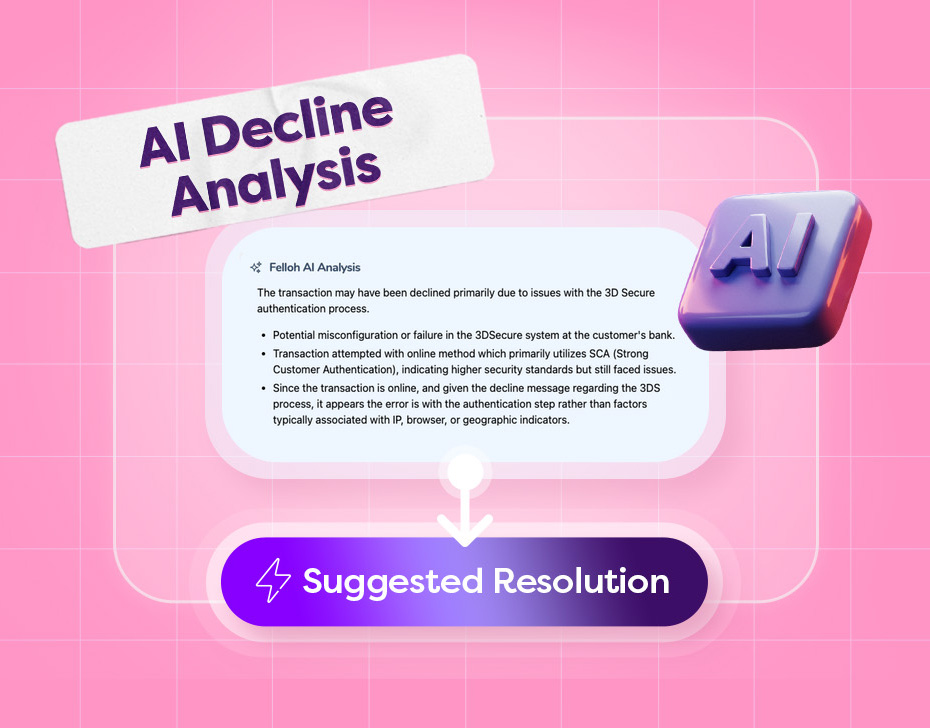
Enhance Your Payment Success with felloh's AI Decline Analysis for the Travel Industry
felloh's AI Decline Analysis surfaces real-time insight on why card payments fail and the best next step — for higher acceptance on travel bookings.
Read article Insights
Minimising Payment Risks of phone payments: The Smart Way for Travel Merchants
Phone bookings are still essential in travel, but they carry payment-security risk. How to keep last-minute trips moving without exposing the business.
Read article
Connect the dots.
See how payments, settlement, refunds and reporting evidence connect around every booking.