
Customer authentication is the process of confirming that the person initiating a payment is the legitimate account holder. It includes 3D Secure authentication, biometric checks performed by the issuer’s banking app, knowledge-based questions, and out-of-band approvals. Under PSD2, certain transactions in the UK and EU must use Strong Customer Authentication unless an exemption applies.
Travel payments glossary
Customer authentication
The process of confirming the customer making a payment is who they claim to be.
Why it matters in travel
Travel payments lean heavily on authentication because most sales are card-not-present and the values are high. A robust authentication setup is what shifts chargeback liability away from the travel business and keeps acceptance rates healthy on legitimate customers.
Authentication design is the place where conversion and risk meet directly. Too aggressive and legitimate customers drop off; too permissive and fraud and chargebacks follow. The right balance is data-driven, segment-specific and tuned by booking value, issuer, channel and recurrence.
The travel businesses that get authentication right read the outcomes at the booking level: which authentications succeeded, which were exempted successfully, which were challenged but completed, which were abandoned. That feedback is what lets the policy improve over time. The businesses that set authentication once and never tune it lose conversion they could have kept.
How felloh helps
felloh records customer authentication results alongside the booking so the evidence is available when a dispute, refund decision or compliance review needs it.
The Transactions view in the dashboard records the authentication method, outcome and exemption status against every payment. Risk Analysis aggregates the picture by issuer and channel so authentication policy can be tuned where it actually helps acceptance and chargeback liability.
For travel businesses balancing conversion against fraud and dispute risk, authentication policy stops being a static rule and becomes a measured decision. The same evidence supports the booking, the dispute defence and the compliance review.
Where this shows up in risk and disputes.
Customer authentication touches more than one workflow at felloh. Start with the pages most travel teams reach for next.
- Financial Control
Control refunds, exceptions, supplier exposure and payment risk against the same booking record.
Explore - Financial Protection Data
Authentication, settlement, protected funds and refund history kept with the booking for dispute defence.
Explore - Payment Optimisation
Acceptance, decline and authentication evidence so you can act on the patterns that matter.
Explore
More on payment risk and disputes.
Real-world context from the felloh team and customers, written for travel finance and operations.
 Updates
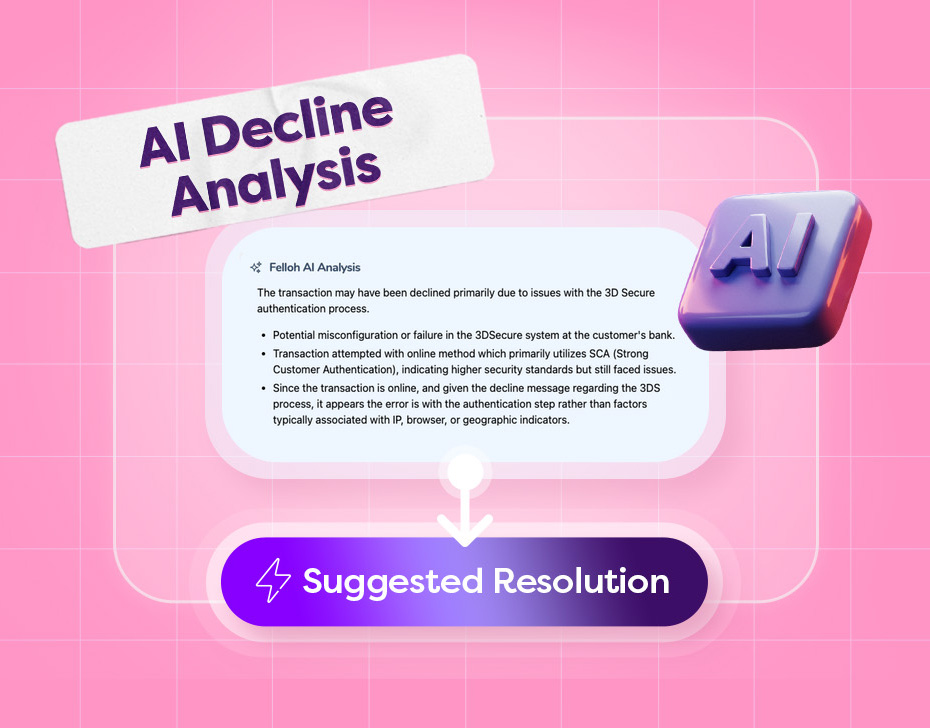
Enhance Your Payment Success with felloh's AI Decline Analysis for the Travel Industry
felloh's AI Decline Analysis surfaces real-time insight on why card payments fail and the best next step — for higher acceptance on travel bookings.
Read article Insights
Minimising Payment Risks of phone payments: The Smart Way for Travel Merchants
Phone bookings are still essential in travel, but they carry payment-security risk. How to keep last-minute trips moving without exposing the business.
Read article
Connect the dots.
See how payments, settlement, refunds and reporting evidence connect around every booking.