
Card verification is the set of checks used during authorisation to confirm a card is genuine and the user has legitimate access to it. These include CVV/CVC validation, Address Verification System (AVS) checks, 3D Secure authentication, and increasingly biometric and device signals returned through the issuer’s authentication app. Each check returns a result that the merchant and acquirer use to decide whether to accept the transaction.
Travel payments glossary
Card verification
Checks used to confirm a card is genuine and the user has legitimate access to it.
Why it matters in travel
Card verification matters most in travel where bookings are high value, card-not-present and committed against non-refundable supplier inventory. A weak verification stack means more chargebacks survive representment; a heavy-handed one breaks conversion on legitimate customers mid-booking.
A travel booking is not the place to find out that the verification stack is too aggressive. A customer mid-checkout who hits an unnecessary block is gone, and the operator never knows what the booking would have been worth. A customer who passes verification despite weak signals is the start of a chargeback months later.
The travel businesses with healthy verification stacks segment the response by booking value and customer signal. A £100 ancillary does not need the same depth of verification as a £6,000 itinerary, and treating them the same way costs revenue on the small end and bookings on the large end.
How felloh helps
felloh keeps verification signals attached to the booking so risk and finance teams can see why each payment was accepted or refused and respond with consistent evidence when a dispute appears.
The Transactions view records CVC, AVS and 3DS outcomes against every payment, with verification status surfacing alongside the booking trail. Risk Analysis aggregates the picture by booking value, issuer and channel so over-blocking and under-verifying patterns are both visible.
For fraud teams calibrating the verification stack, the feedback loop is finally closed. Adjustments to verification policy can be measured by booking outcome — captured, settled, disputed — rather than by anecdote.
Where this shows up in risk and disputes.
Card verification touches more than one workflow at felloh. Start with the pages most travel teams reach for next.
- Financial Control
Control refunds, exceptions, supplier exposure and payment risk against the same booking record.
Explore - Financial Protection Data
Authentication, settlement, protected funds and refund history kept with the booking for dispute defence.
Explore - Payment Optimisation
Acceptance, decline and authentication evidence so you can act on the patterns that matter.
Explore
More on payment risk and disputes.
Real-world context from the felloh team and customers, written for travel finance and operations.
 Updates
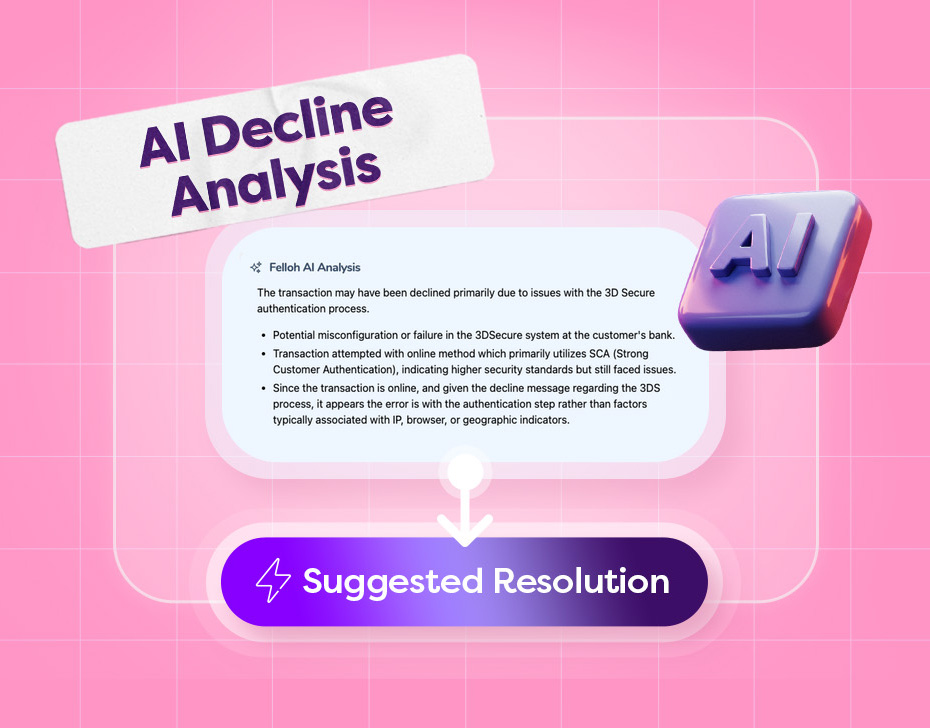
Enhance Your Payment Success with felloh's AI Decline Analysis for the Travel Industry
felloh's AI Decline Analysis surfaces real-time insight on why card payments fail and the best next step — for higher acceptance on travel bookings.
Read article Insights
Minimising Payment Risks of phone payments: The Smart Way for Travel Merchants
Phone bookings are still essential in travel, but they carry payment-security risk. How to keep last-minute trips moving without exposing the business.
Read article
Connect the dots.
See how payments, settlement, refunds and reporting evidence connect around every booking.