
Fraud prevention is the broader programme that sits around fraud detection — the controls, processes and product decisions that make it harder for fraud to succeed in the first place. It covers everything from authentication design and checkout UX to refund policy, staff training, supplier vetting and post-incident review. Prevention is a programme; detection is a tool inside it.
Travel payments glossary
Fraud prevention
Designing controls, processes and product flows to reduce the likelihood of fraud succeeding.
Why it matters in travel
Travel businesses lose money to fraud in repeatable patterns: refund abuse, agency credential theft, booking-platform takeovers, supplier insolvency exposure. A prevention programme that learns from those losses and tightens the right control each time is how a travel business stays ahead.
Fraud prevention in travel is not a one-time setup — it is a continuous loop of detect, defend, learn, harden. The patterns evolve: card testing today, account takeover tomorrow, refund abuse the month after. A business that builds the loop catches each wave at the start; one that builds rules once and forgets them is always responding to the previous wave while the next one builds.
The travel businesses with mature fraud-prevention programmes use booking-level evidence as feedback into the detection layer. They see which controls caught real fraud, which blocked legitimate customers, and which let fraud through. Every iteration tightens the picture. The businesses that do not close the loop pay the same fraud cost year after year because the same patterns keep working.
How felloh helps
felloh keeps the booking-level evidence that prevention programmes need to learn from — what was approved, what disputed, what refunded, what settled — so the next control change is grounded in real outcomes.
The dashboard’s Risk Analysis and Chargebacks views read booking outcomes back into the prevention picture so the loop closes. Playbooks can automate response — block a BIN range that started card-testing, escalate manual review on a refund pattern, raise authentication thresholds on a brand seeing rising disputes — without engineering work.
For travel businesses building fraud-prevention programmes that learn over time, the feedback comes from the bookings themselves. The prevention layer evolves with the threat model rather than ossifying at the moment it was first set.
Where this shows up in risk and disputes.
Fraud prevention touches more than one workflow at felloh. Start with the pages most travel teams reach for next.
- Financial Control
Control refunds, exceptions, supplier exposure and payment risk against the same booking record.
Explore - Financial Protection Data
Authentication, settlement, protected funds and refund history kept with the booking for dispute defence.
Explore - Payment Optimisation
Acceptance, decline and authentication evidence so you can act on the patterns that matter.
Explore
More on payment risk and disputes.
Real-world context from the felloh team and customers, written for travel finance and operations.
 Updates
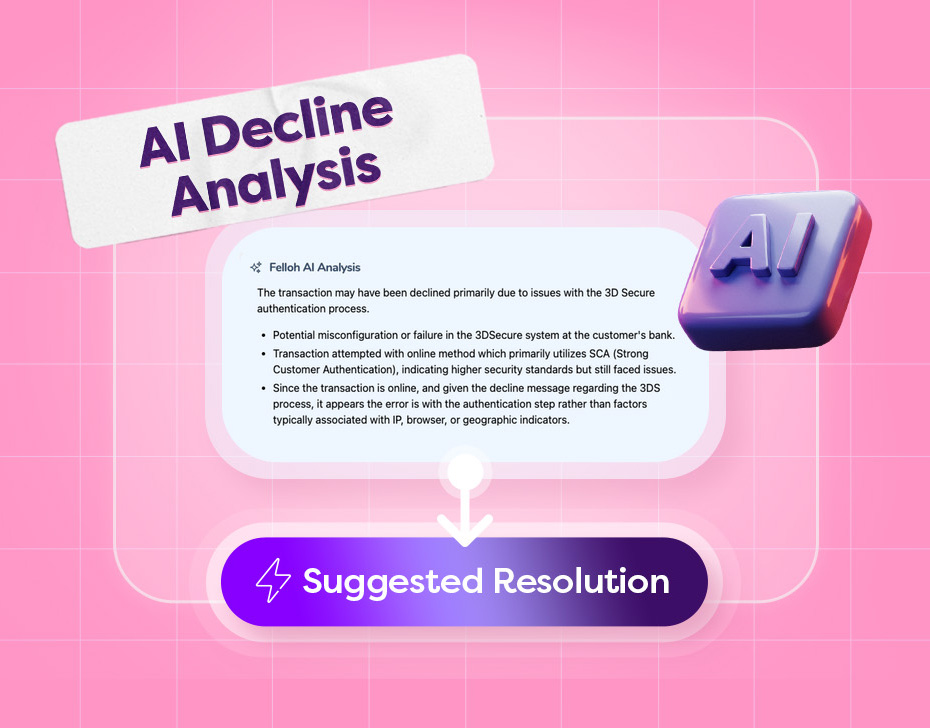
Enhance Your Payment Success with felloh's AI Decline Analysis for the Travel Industry
felloh's AI Decline Analysis surfaces real-time insight on why card payments fail and the best next step — for higher acceptance on travel bookings.
Read article Insights
Minimising Payment Risks of phone payments: The Smart Way for Travel Merchants
Phone bookings are still essential in travel, but they carry payment-security risk. How to keep last-minute trips moving without exposing the business.
Read article
Connect the dots.
See how payments, settlement, refunds and reporting evidence connect around every booking.