
A chargeback is the reversal of a card payment initiated by the cardholder’s issuing bank, usually because the cardholder has disputed the transaction with the issuer. The acquirer debits the merchant for the disputed amount and the merchant has the option to defend the transaction by providing evidence (representment). If accepted, the chargeback stands; if rejected, the funds are returned to the merchant. Chargebacks also carry administrative fees regardless of outcome.
Travel payments glossary
Chargeback
A reversal of a card payment initiated by the cardholder’s issuing bank.
Why it matters in travel
Travel chargebacks are operationally heavy because the disputed amount may already have been paid through to a supplier, services may have been partly delivered, and the booking record itself can be the most important evidence. A chargeback wave around a single supplier failure or disrupted destination can put significant cash at risk.
Defending a travel chargeback typically requires reconstructing the full booking lifecycle: when it was sold, who took the deposit, what evidence the customer received, what the supplier confirmed, what the cancellation policy said, what authentication evidence sits behind the original payment. If any one piece is missing, representment fails and the cash goes back to the customer.
The travel teams that handle chargebacks well prepare the evidence as bookings happen, not when disputes land. The teams that prepare it reactively spend hours per dispute and lose representment cases they should have won. At scale, the difference is meaningful enough to show up in a finance director’s monthly report.
How felloh helps
felloh keeps chargeback context — original payment, supplier payment, refund history, communication trail, authentication evidence — attached to the booking so the response is one query away, not a multi-system hunt.
The Chargebacks view in the dashboard surfaces every dispute against the booking, with reason code, evidence pack and response status all in one place. Risk Analysis tracks chargeback velocity and ratio over time so trend shifts become visible the day they start rather than the day the scheme issues a notice.
For travel teams that previously assembled representment from four different systems, the response time drops from hours to minutes. Win rates rise because the evidence is complete, and the operational cost per chargeback drops to the point where defending becomes worthwhile.
Where this shows up in risk and disputes.
Chargeback touches more than one workflow at felloh. Start with the pages most travel teams reach for next.
- Financial Control
Control refunds, exceptions, supplier exposure and payment risk against the same booking record.
Explore - Financial Protection Data
Authentication, settlement, protected funds and refund history kept with the booking for dispute defence.
Explore - Payment Optimisation
Acceptance, decline and authentication evidence so you can act on the patterns that matter.
Explore
More on payment risk and disputes.
Real-world context from the felloh team and customers, written for travel finance and operations.
 Updates
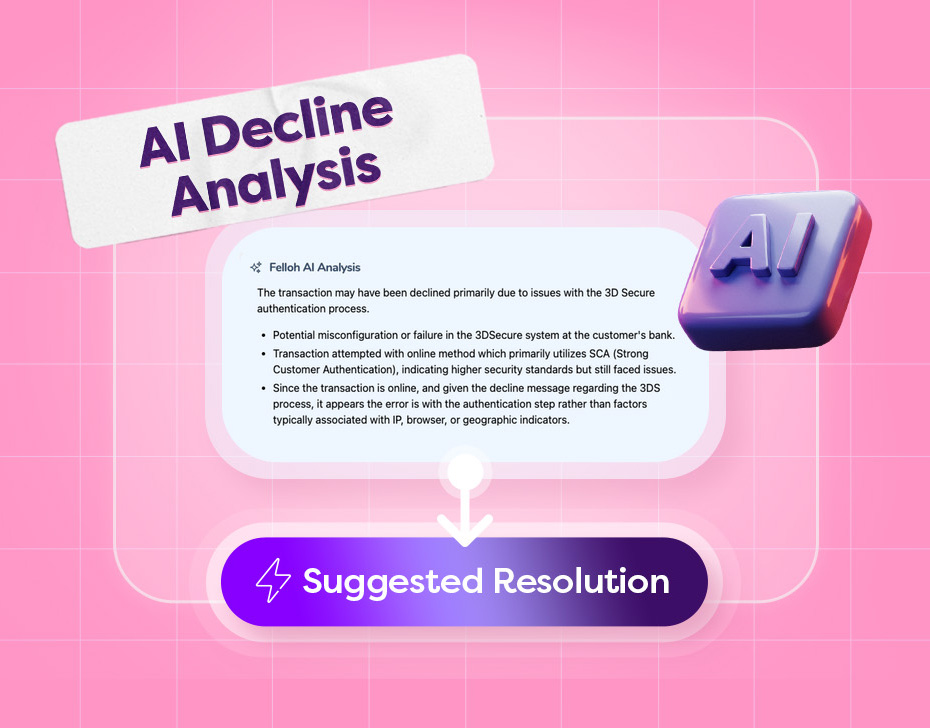
Enhance Your Payment Success with felloh's AI Decline Analysis for the Travel Industry
felloh's AI Decline Analysis surfaces real-time insight on why card payments fail and the best next step — for higher acceptance on travel bookings.
Read article Insights
Minimising Payment Risks of phone payments: The Smart Way for Travel Merchants
Phone bookings are still essential in travel, but they carry payment-security risk. How to keep last-minute trips moving without exposing the business.
Read article
Connect the dots.
See how payments, settlement, refunds and reporting evidence connect around every booking.