
Chargeback fraud, sometimes called friendly fraud or first-party misuse, is a dispute raised by a cardholder against a legitimate purchase they did receive or did authorise. Reasons vary from genuine confusion about a descriptor to deliberate abuse of the chargeback process. Merchants defend it through representment, supplying evidence that the customer received what they paid for.
Travel payments glossary
Chargeback fraud
A dispute raised by a cardholder who did receive the goods or services they paid for.
Why it matters in travel
In travel, friendly fraud often appears after a holiday — disputes against deposits and balances on trips that were taken, refund requests that were already settled, or disputes that test whether the merchant has the evidence chain to defend. Without booking-level evidence linking payment, communication and travel record, defending is expensive and unreliable.
Friendly fraud is particularly pernicious in travel because the dispute often arrives months after the service was delivered. The customer has travelled, returned, and now disputes the charge — relying on the merchant’s evidence to have degraded over time. A travel business with strong booking-level evidence defends these successfully; one without often accepts disputes it should not.
The travel businesses that handle friendly fraud well preserve the booking, communication, supplier-confirmation and authentication evidence as routine, not as a response to disputes. The businesses that improvise evidence at dispute time lose representment they should have won and gradually train customers that disputes work.
How felloh helps
felloh keeps the booking-level evidence — payments, refunds, communications, supplier confirmation — attached to the same record, so chargeback fraud is defended with the original trail intact.
The dashboard’s Bookings and Transactions views preserve the customer journey — every payment, every communication, every supplier confirmation — long after the trip has ended. Where a friendly-fraud dispute lands months later, the Chargebacks workflow assembles representment evidence against the same record the booking was created in.
For travel businesses defending post-trip disputes against customers who travelled and returned, the evidence stays as fresh as the day the booking was taken. Win rates on friendly-fraud cases reflect the strength of the original record, not the operations team’s ability to dig through old emails.
Where this shows up in risk and disputes.
Chargeback fraud touches more than one workflow at felloh. Start with the pages most travel teams reach for next.
- Financial Control
Control refunds, exceptions, supplier exposure and payment risk against the same booking record.
Explore - Financial Protection Data
Authentication, settlement, protected funds and refund history kept with the booking for dispute defence.
Explore - Payment Optimisation
Acceptance, decline and authentication evidence so you can act on the patterns that matter.
Explore
More on payment risk and disputes.
Real-world context from the felloh team and customers, written for travel finance and operations.
 Updates
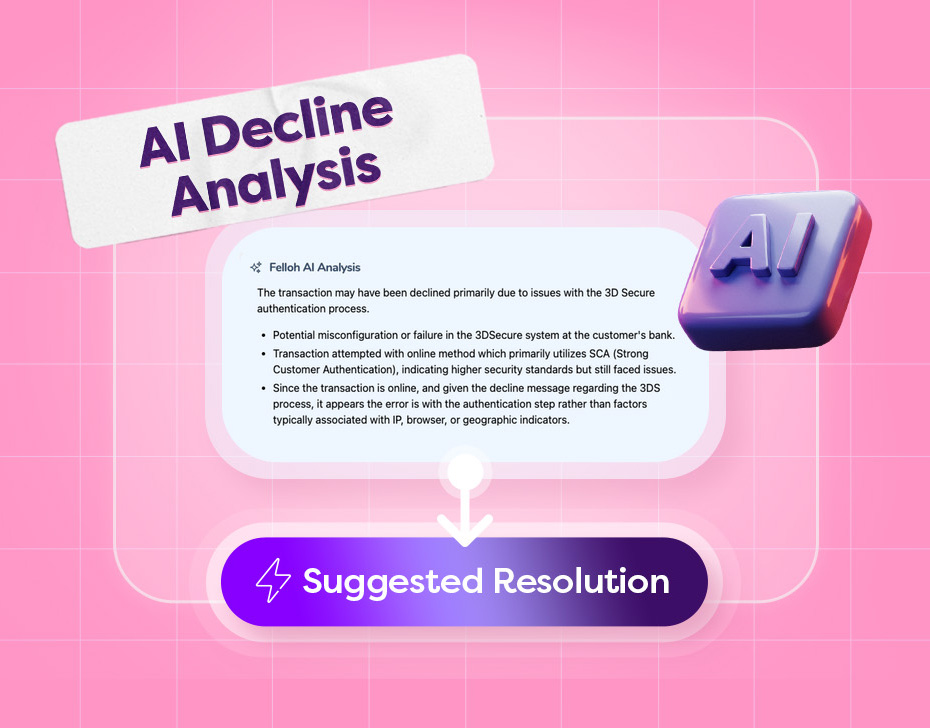
Enhance Your Payment Success with felloh's AI Decline Analysis for the Travel Industry
felloh's AI Decline Analysis surfaces real-time insight on why card payments fail and the best next step — for higher acceptance on travel bookings.
Read article Insights
Minimising Payment Risks of phone payments: The Smart Way for Travel Merchants
Phone bookings are still essential in travel, but they carry payment-security risk. How to keep last-minute trips moving without exposing the business.
Read article
Connect the dots.
See how payments, settlement, refunds and reporting evidence connect around every booking.