
A Universal Payment Identifier Code (UPIC) is an identifier that allows a business to receive electronic payments without disclosing its real bank-account details. The UPIC routes payments to the underlying account through a service provider, reducing the risk of fraud or unauthorised debits if the identifier is exposed.
Travel payments glossary
Universal Payment Identifier Code (UPIC)
An identifier that lets businesses receive electronic payments without exposing real bank-account details.
Why it matters in travel
Travel businesses sharing receiving details with many partners, agencies or suppliers can benefit from receiving identifiers that do not expose the real account, particularly when those details circulate in remittance files and contracts. The trade-off is the operational dependency on the identifier provider.
For travel finance teams that exchange account details across hundreds of B2B counterparts, a receiving identifier that does not expose the underlying bank account adds a meaningful layer of fraud resilience. Card-data theft is well understood; bank-account-detail leakage is less talked about but no less consequential when an attacker uses leaked details to attempt unauthorised debits.
UPIC-style identifiers are useful where they exist, but the operational reliance on the provider has to be priced in. Travel businesses choose them when the volume of B2B detail exchange is high enough that fraud resilience is worth the extra integration cost, and accept the dependency that comes with it.
How felloh helps
felloh ties receiving and beneficiary identifiers to the booking and supplier record so payments arrive matched and traceable without exposing underlying account details unnecessarily.
The Beneficiaries page in the dashboard holds receiving and routing identifiers against the supplier or partner record, with validation on entry and inbound matching via Cashflow and AISP. Where a UPIC-style identifier is in use, the underlying account is shielded while the booking-level reconciliation continues to work.
For travel businesses exchanging receiving details with hundreds of B2B counterparts, fraud resilience improves without breaking matching. The identifiers stay manageable, the inbound flows match against bookings as they should, and the operational picture stays single.
Where this shows up in finance operations.
Universal Payment Identifier Code (UPIC) touches more than one workflow at felloh. Start with the pages most travel teams reach for next.
- Financial Operations
Reconciliation, settlement, refunds and protected-funds workflows on one booking-aware ledger.
Explore - Automate Reconciliation
Bulk settlements unpacked to fees, refunds and chargebacks; bank transfers matched without references to chase.
Explore - Know Your Cash Position
See received, protected, committed and available cash by booking — without rebuilding the picture from exports.
Explore
More on travel finance operations.
Real-world context from the felloh team and customers, written for travel finance and operations.
 Insights
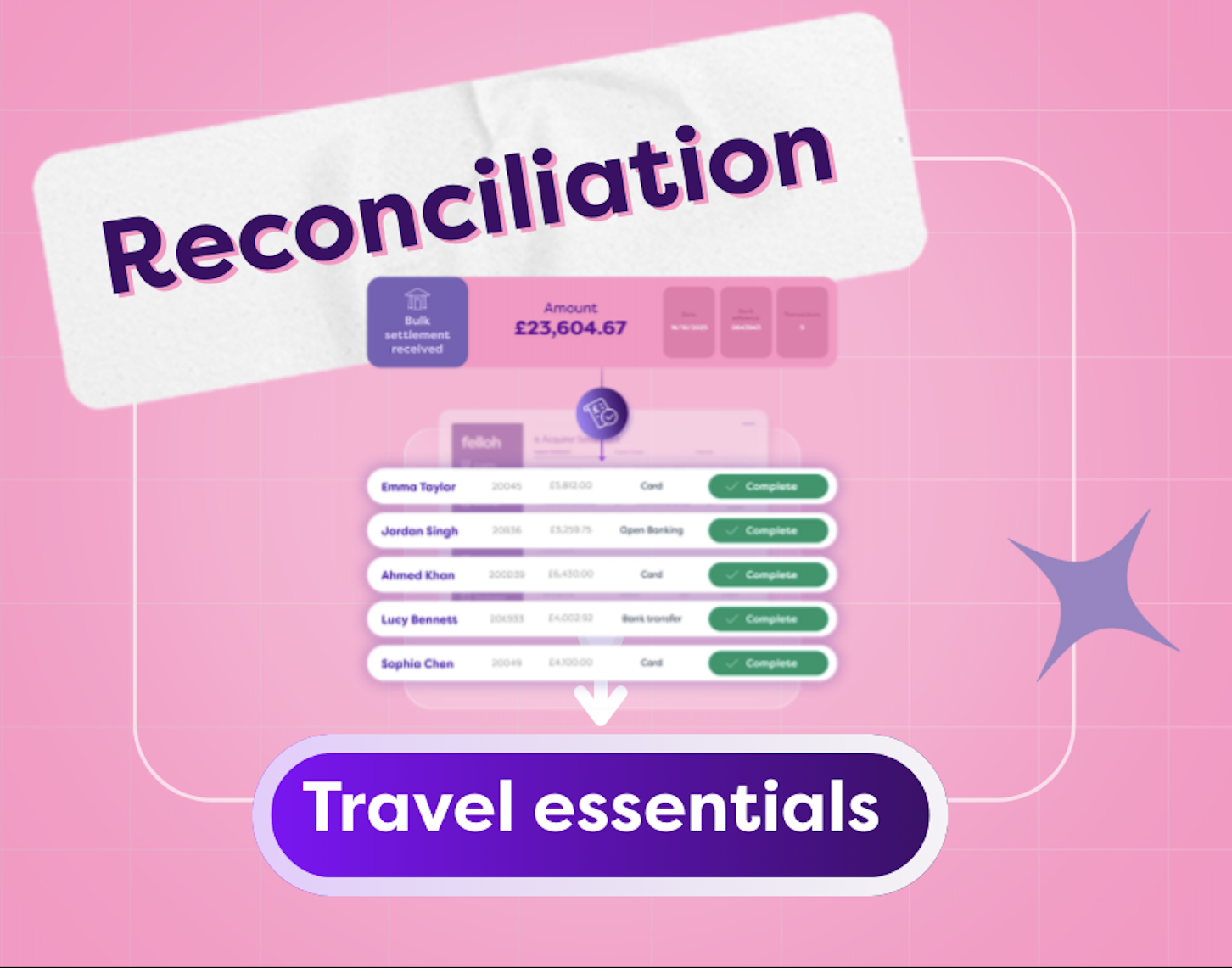
Reconciliation: What it is and why your Travel Business needs it
Why travel operators see a gap between sales records and the bank balance — and the basics of reconciling payments back to bookings.
Read article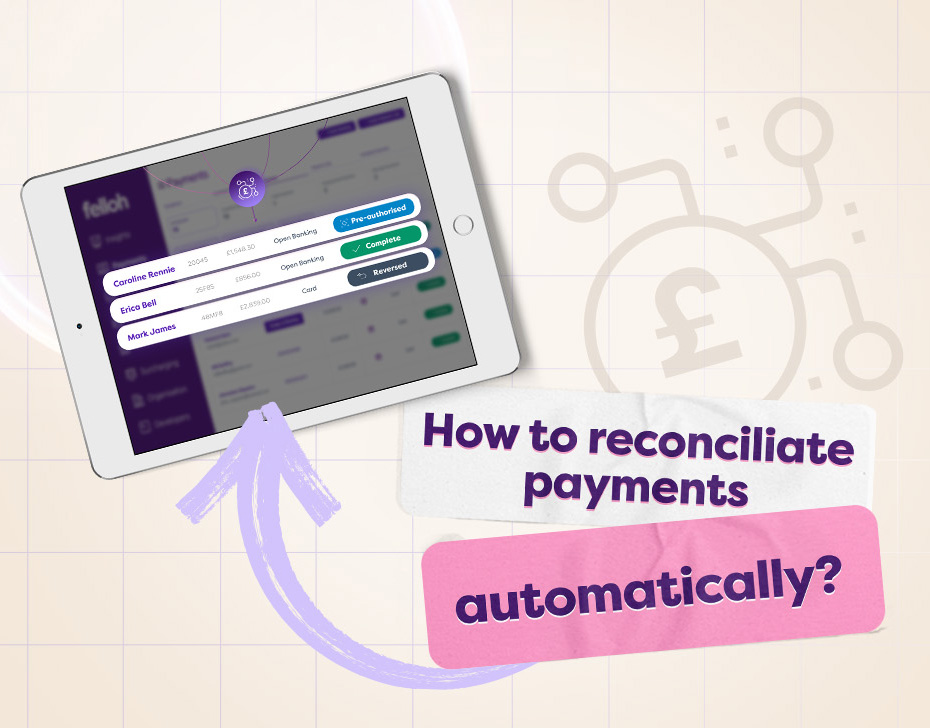 Updates
Card Payment and Bank Transaction Reconciliation Made Easy for Travel pros
With felloh we make reconciliation of card payments and bank transactions simple.
Read article
Connect the dots.
See how payments, settlement, refunds and reporting evidence connect around every booking.