
The decline ratio is the proportion of authorisation requests that end in a decline rather than an approval. It is one of the headline acceptance metrics for any payment program and is monitored by acquirers and schemes alongside the chargeback ratio. A rising decline ratio can signal a fraud filter problem, a misconfigured 3DS flow, BIN-level risk or simply a shift in customer mix.
Travel payments glossary
Decline ratio
The proportion of authorisation requests that end in a decline.
Why it matters in travel
Travel decline ratios are sensitive to seasonality, marketing campaigns and supplier disruption — a single bad weekend of declines on deposits can lose meaningful revenue. Watching decline ratios by BIN, by issuer country and by booking value helps spot where to act.
A campaign launch that drives a decline-ratio spike can quietly cost more than the campaign earns. Without segmentation by BIN, issuer country and booking value, the cause is invisible — and the marketing team moves on while finance is left explaining the gap between attempted and captured revenue. The teams that catch this watch the ratio in real time during campaigns.
Beyond campaigns, baseline decline ratios are diagnostic. A drift upward over weeks usually signals a tightening fraud filter, an issuer-side rule change, or a card-product mix shift. The travel businesses that monitor at this level recover bookings the businesses that do not lose forever.
How felloh helps
felloh exposes decline ratios alongside the booking record so travel teams can spot trends, retry strategically and feed the picture back into product and acquirer decisions.
The Decline Analysis page in the dashboard exposes ratio by acquirer, issuer, BIN, brand and booking value, with trend lines that show shifts in real time. Risk Analysis ties the decline picture back to chargeback and refund outcomes so the trade-offs between acceptance and risk are visible together.
For acquirer renegotiation conversations and product decisions about checkout flow, the evidence is already there. A spike in declines that lined up with a campaign launch shows up in time to act, and the decision to add or remove an authentication exemption can be measured by its real impact on captured bookings.
Where this shows up in risk and disputes.
Decline ratio touches more than one workflow at felloh. Start with the pages most travel teams reach for next.
- Financial Control
Control refunds, exceptions, supplier exposure and payment risk against the same booking record.
Explore - Financial Protection Data
Authentication, settlement, protected funds and refund history kept with the booking for dispute defence.
Explore - Payment Optimisation
Acceptance, decline and authentication evidence so you can act on the patterns that matter.
Explore
More on payment risk and disputes.
Real-world context from the felloh team and customers, written for travel finance and operations.
 Updates
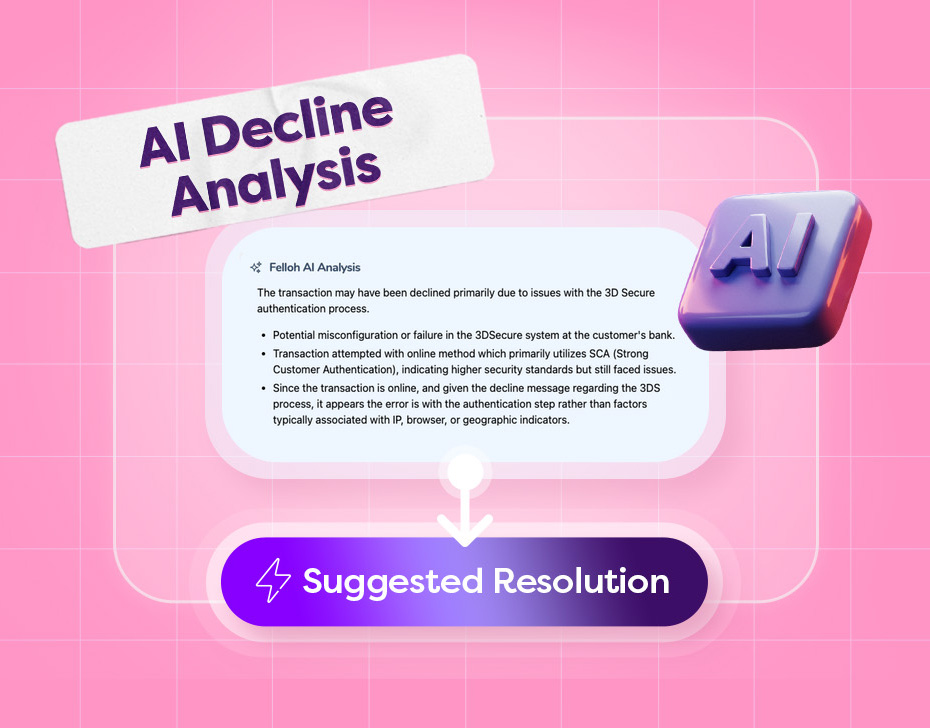
Enhance Your Payment Success with felloh's AI Decline Analysis for the Travel Industry
felloh's AI Decline Analysis surfaces real-time insight on why card payments fail and the best next step — for higher acceptance on travel bookings.
Read article Insights
Minimising Payment Risks of phone payments: The Smart Way for Travel Merchants
Phone bookings are still essential in travel, but they carry payment-security risk. How to keep last-minute trips moving without exposing the business.
Read article
Connect the dots.
See how payments, settlement, refunds and reporting evidence connect around every booking.