
.svg)
Updates
Test Authors
Test Authors

Test Authors


Lorem ipsum dolor sit amet, consectetur adipiscing elit. Suspendisse tincidunt sagittis eros.
Lorem Ipsum is simply dummy text of the printing and typesetting industry.
Lorem Ipsum is simply dummy text of the printing and typesetting industry.


Building for a connected travel stack: introducing felloh SDKs
Lorem ipsum dolor sit amet, consectetur adipiscing elit. Suspendisse tincidunt sagittis eros.
Lorem Ipsum is simply dummy text of the printing and typesetting industry.
Lorem Ipsum is simply dummy text of the printing and typesetting industry.
Making ATOL renewals less painful: practical insights from TTC and felloh
Lorem ipsum dolor sit amet, consectetur adipiscing elit. Suspendisse tincidunt sagittis eros.
Lorem Ipsum is simply dummy text of the printing and typesetting industry.
Lorem Ipsum is simply dummy text of the printing and typesetting industry.
Data connectivity isn’t an IT project. It’s the whole game.
Lorem ipsum dolor sit amet, consectetur adipiscing elit. Suspendisse tincidunt sagittis eros.
Lorem Ipsum is simply dummy text of the printing and typesetting industry.
Lorem Ipsum is simply dummy text of the printing and typesetting industry.
.png)
Building for a connected travel stack: introducing felloh SDKs

Making ATOL renewals less painful: practical insights from TTC and felloh
.png)
Data connectivity isn’t an IT project. It’s the whole game.
Making multi channel payments work across travel systems
Making multi channel payments work across travel systems
.png)
Why Growing Businesses Struggle to Scale Finance Operations
When Fraud Prevention Becomes a Growth Problem
.svg)
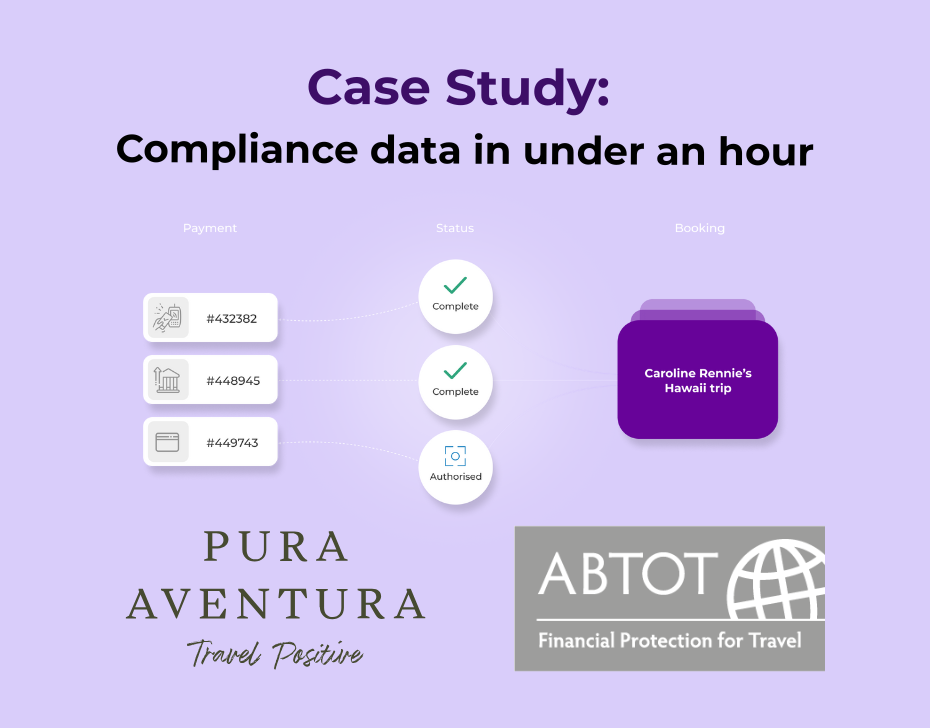
Case Study: How Pura Aventura secured ABTOT-ready compliance data – in under an hour
.svg)


NEWS & RESOURCES
We love sharing our travel expertise, so we're always creating new resources to help travel businesses succeed.


We love sharing our travel expertise, so we're always creating new resources to help travel businesses succeed.
.png)

.png)
Insights

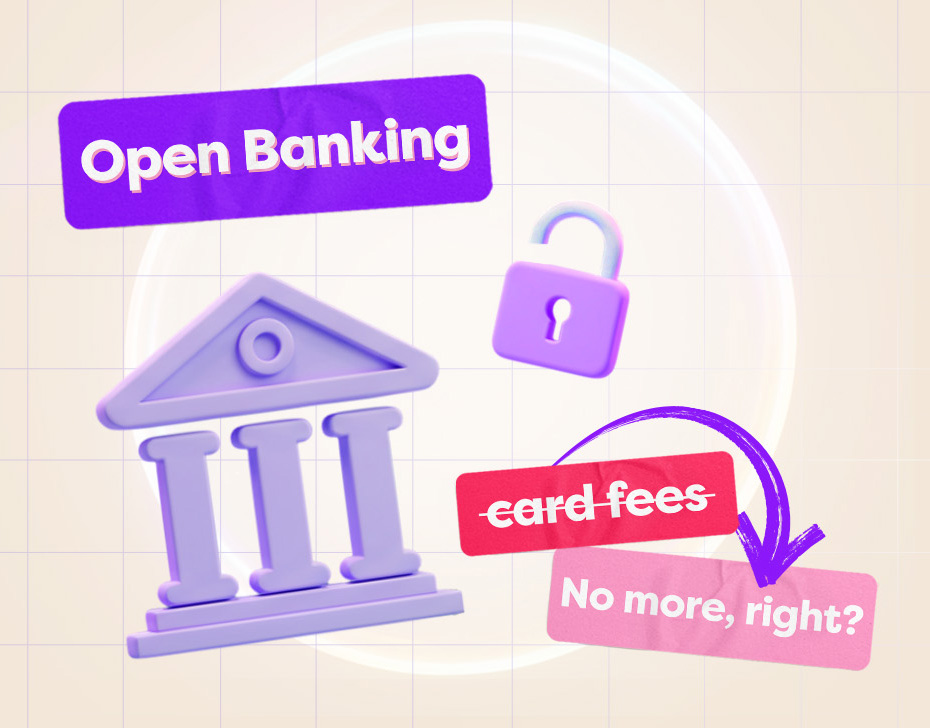
When Open Banking first hit the scene, there was a lot of buzz about how exciting this could be in travel - gone would be the days of your card processing fees - absolute game changer in an industry with average payment values of over £1000. At Felloh, we strongly believed this too, our very first version of our product allowed travel merchants to create payment links and customers to pay via Open Banking, what a winner!
.png)
1
Automate your manual tasks with AI-powered Software as a Service
You don’t need in-house AI tools to do this, most software providers will be doing the heavy lifting for you
2
Step up your SEO and AI Optimisation (AIO) strategy
Make sure your experiences are easily discoverable in consumer-generated itineraries. If you’ve invested in search engine optimisation (SEO) in the past, a lot of that work will be paying off now, but if not, it’s never too late to tag your images, set meta descriptions and make sure your most important content is machine readable.
3
Experiment cautiously with customer facing AI tools
If you’re not yet using any AI in your business, now is not the time to rip out your search function on your website and replace it with an AI chat bot! As an end consumer you probably know how frustrating it can be to deal with a poorly trained bot. Instead, find a problem you have which is worth solving but not business critical to start learning in a low-risk environment.
blog
Insights



When Open Banking first hit the scene, there was a lot of buzz about how exciting this could be in travel - gone would be the days of your card processing fees - absolute game changer in an industry with average payment values of over £1000. At Felloh, we strongly believed this too, our very first version of our product allowed travel merchants to create payment links and customers to pay via Open Banking, what a winner!
Of course, as our COO Chris Jones often says, “No plan survives contact with the enemy” - he’s an ex-bomb disposal guy so his analogies are always top notch.
When launching the product with our first customer, they were keen that the solution have the option to pay by card too, just in case people didn’t understand this new technology and wanted the familiarity of safe-old-credit-cards when paying for their holiday. Needless to say, the data spoke for itself pretty quickly and a couple of our assumptions were proven wrong, very wrong:
WRONG! Turns out, it takes a special kind of nerd to care about this stuff and many of our merchants didn’t fully understand Open Banking and so when it came to closing a sale, they were much more confident promoting the card payment, either over the phone or via payment link.
WRONG! And this one really stings. Because Open Banking could be as reliable as card payments if all the high street banks had agreed to implement it in consistent ways. But this is potentially the issue when companies are forced into something through regulation rather than opting in for their own business reasons. Where we found challenges with this included:
a) Daily limits varying across banks and even bank accounts - so that £5000 payment link you sent out should work with most banks (not quite the reassuring message we wanted to be sending.)
b) User flows vary from bank to bank, so even when the merchant was confidently recommending the payment method, when it came to troubleshooting, there was very little support to be offered.
The fact of the matter is, end consumers of travel businesses like paying by credit card because there is a perceived protection of their money. Sure, those inside the travel sector understand that actually any package travel arrangement would be protected regardless but the average consumer on the street really doesn’t (as self-reported from this average consumer on the street who religiously built my own packages to save a fiver before I got under the hood of the travel sector.)
This is not merely anecdotal, of the thousands of travel payments Felloh processes each week, less than 2% of end consumers are choosing to pay by Open Banking. We even added in the feature for merchants to disable card payments and only offer Open Banking but this was rarely used by our merchants. So the challenge was not only the end-consumer appetite but merchant appetite too.
The more we spoke to merchants, the more clearly we saw that card payments were easy for the end-consumer but quite a headache for finance teams. So while the consumer behaviour is staunchly in the card schemes hands, why not use Open Banking to optimise that experience? Open Banking isn’t just Payment Initiation Services (PIS), it also includes Account Information Services (AIS). What this means is that you can connect your bank account to unlock its data using third party services.
Why is this useful for travel business’s customer payments? A couple of reasons:
Card processing companies (merchant acquirers) typically deposit your transactions in batches; daily, weekly or however regularly you have agreed with them. These batches could have fees or chargebacks or refunds deducted, so even if you’re expecting 10 x £1000 payments to land in your account, you may not find a nice neat £10000 deposit. Connecting your bank account through a platform that can access both your transaction data, the merchant acquirer batch data and your bank data will automatically reconcile the transactions.
For many of the merchants we work with, the Open Banking payment didn’t feel much easier than “good old fashioned bank transfer” - the data quality and tagging on the inbound transaction was not deemed valuable enough to try and change their customer’s behaviour. What we have been able to do for these customers is allow them to tag their inbound customer bank transfers to bookings, so even if deposit was paid on card and balance via bank transfer, there’s a fully reconciled booking.
No business can grant bank account access to all their employees and finance teams would probably prefer not to have to answer if Customer X’s payment came through. Using AIS allows teams to view the bank account transactions and permissions can be set at different level depending on their role. This means your sales or admin team could be tagging their customer deposits in the bank without a card reader in sight.
That’s not even scratching the surface of the Open Banking opportunities within travel; once we start thinking about segregation of customer funds and supplier payments, there’s so much opportunity for efficiencies, cost savings and automation. So while the B2C payments may seem like a shiny quick cost saving, look beyond the consumer experience and unlock the full potential of Open Banking for your business.








.png)
.svg)

.avif)