
A travel payments system is the end-to-end combination of acquiring, gateway, reconciliation, settlement, protection and reporting infrastructure that sits around travel bookings. It is the system finance teams rely on to know what cash has been received, protected and committed, and what reporting evidence stands behind each number. A clean system answers operational and compliance questions from the same source.
Travel payments glossary
Travel payments system
The end-to-end system of payment, reconciliation and reporting around travel bookings.
Why it matters in travel
Travel payments systems have to absorb deposits, balances, supplier payments, refunds, chargebacks, protected funds and reporting evidence against the same booking record. Without that single picture, finance teams burn time gluing exports together every month and exposure can hide in the gaps.
The hardest part of running a travel-payments system is keeping the cash story and the operational story in step over time. A booking takes a deposit in January, a balance in May, a supplier payment in June and a refund in August — and somewhere in the middle the customer cancels, the booking moves, the agent changes the price. Every one of those moves has to land cleanly on the same record or the picture quietly drifts away from reality.
When the system works, finance, operations, customer support and the board are all reading from the same source. When it does not, every question becomes a meeting. The visible work of a travel-payments system is reconciliation; the invisible work is making sure the same booking number means the same thing in every place it appears, even six months after travel.
How felloh helps
felloh is built as a connected travel-payments system — one booking-aware ledger that holds payments, settlement, protected funds, supplier obligations and reporting evidence in the same place.
The dashboard surfaces the booking-level finance picture across Bookings, Transactions, Settlement, Refunds, Chargebacks, Cashflow, Suppliers, Beneficiaries and Risk Analysis — each one reading from the same ledger. The pay checkout, the Payment Links workflow and the SDKs all write into the same record, so the operational story stays single regardless of channel.
For travel businesses moving from a patchwork of providers to a connected system, the difference shows up immediately. Finance closes faster, customer support answers questions from one record, and compliance evidence is part of the operational picture rather than a separate reporting layer.
Where this shows up in finance operations.
Travel payments system touches more than one workflow at felloh. Start with the pages most travel teams reach for next.
- Travel Payment Solutions
The felloh travel payment system — card, open banking, links and checkout connected to the booking, protected funds and reporting evidence.
Explore - Financial Operations
Reconciliation, settlement, refunds and protected-funds workflows on one booking-aware ledger.
Explore - Automate Reconciliation
Bulk settlements unpacked to fees, refunds and chargebacks; bank transfers matched without references to chase.
Explore
More on travel finance operations.
Real-world context from the felloh team and customers, written for travel finance and operations.
 Insights
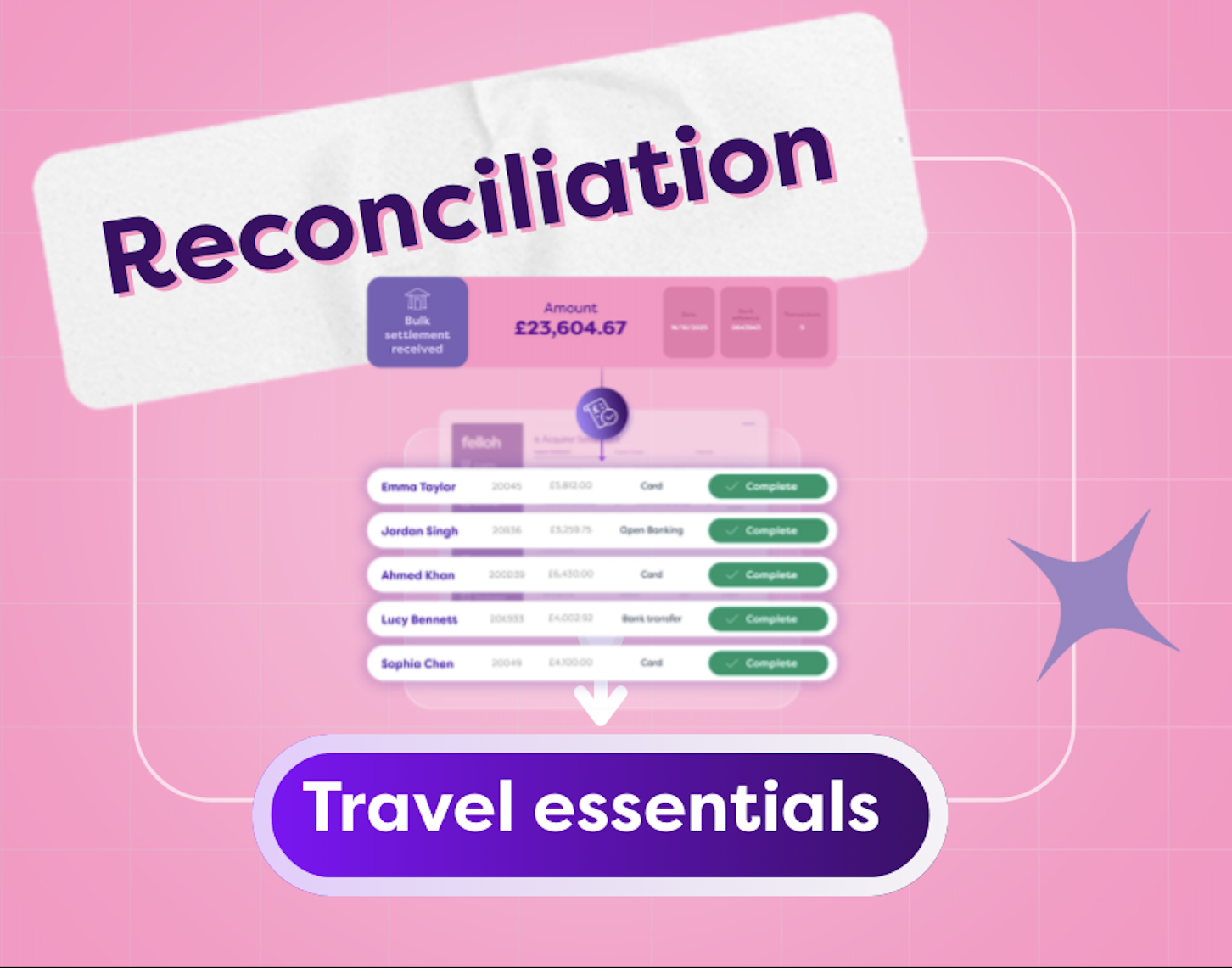
Reconciliation: What it is and why your Travel Business needs it
Why travel operators see a gap between sales records and the bank balance — and the basics of reconciling payments back to bookings.
Read article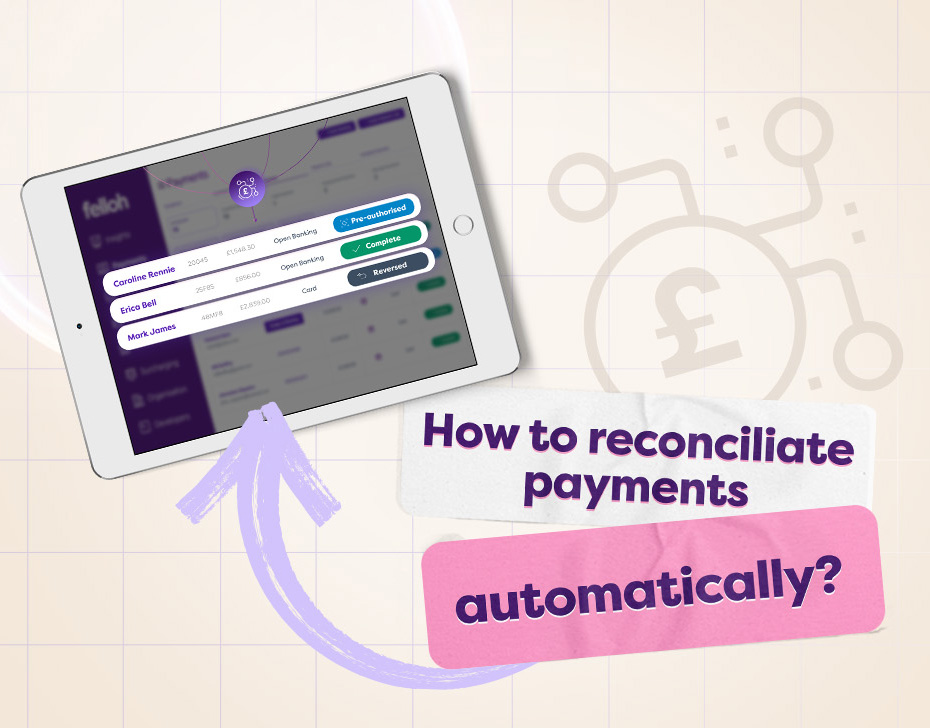 Updates
Card Payment and Bank Transaction Reconciliation Made Easy for Travel pros
With felloh we make reconciliation of card payments and bank transactions simple.
Read article
Connect the dots.
See how payments, settlement, refunds and reporting evidence connect around every booking.