
The Merchant of Record (MoR) is the legal entity that takes the payment from the customer and is responsible for tax, compliance and dispute handling on that payment. It can be the underlying business itself or a third party that acts as MoR on its behalf — common in marketplace, aggregator and software-led commerce models. The MoR appears on the customer’s card statement.
Travel payments glossary
Merchant of record (MoR)
The legal entity responsible for processing a payment and dealing with disputes and compliance.
Why it matters in travel
Travel businesses operating across borders sometimes use a third-party MoR to simplify tax and compliance in markets where direct registration is impractical. The trade-off is reduced control over settlement timing, dispute handling and customer-facing descriptors.
The MoR question is where international travel businesses really feel the cost of global commerce. Direct registration in every market is operationally expensive; using a third-party MoR is faster but means giving up control over settlement, descriptor and dispute flow. The right answer depends on volume, regulatory exposure and how much the brand cares about the customer-facing experience.
The travel businesses that use a third-party MoR well negotiate booking-level data access as part of the deal, so finance and operations still see the picture even when the legal entity is different. The businesses that take the simpler MoR option lose visibility into their own revenue and rebuild it through manual exports months later.
How felloh helps
felloh keeps booking-level evidence intact whether the travel business is its own MoR or working with one, so the picture for finance, support and compliance does not fragment.
The dashboard’s Bookings and Settlement views surface the underlying booking-level picture regardless of MoR arrangement, with the legal-entity context recorded in the Audit and Suppliers views. Where a third-party MoR handles settlement and dispute correspondence, the booking trail still flows through to the operating teams that need it.
For travel businesses using a third-party MoR for international expansion, the trade-off in operational visibility is mitigated. The customer-facing experience remains compliant in each market, and the finance team still gets the booking-level evidence they need.
Where this shows up in finance operations.
Merchant of record (MoR) touches more than one workflow at felloh. Start with the pages most travel teams reach for next.
- Financial Operations
Reconciliation, settlement, refunds and protected-funds workflows on one booking-aware ledger.
Explore - Automate Reconciliation
Bulk settlements unpacked to fees, refunds and chargebacks; bank transfers matched without references to chase.
Explore - Know Your Cash Position
See received, protected, committed and available cash by booking — without rebuilding the picture from exports.
Explore
More on travel finance operations.
Real-world context from the felloh team and customers, written for travel finance and operations.
 Insights
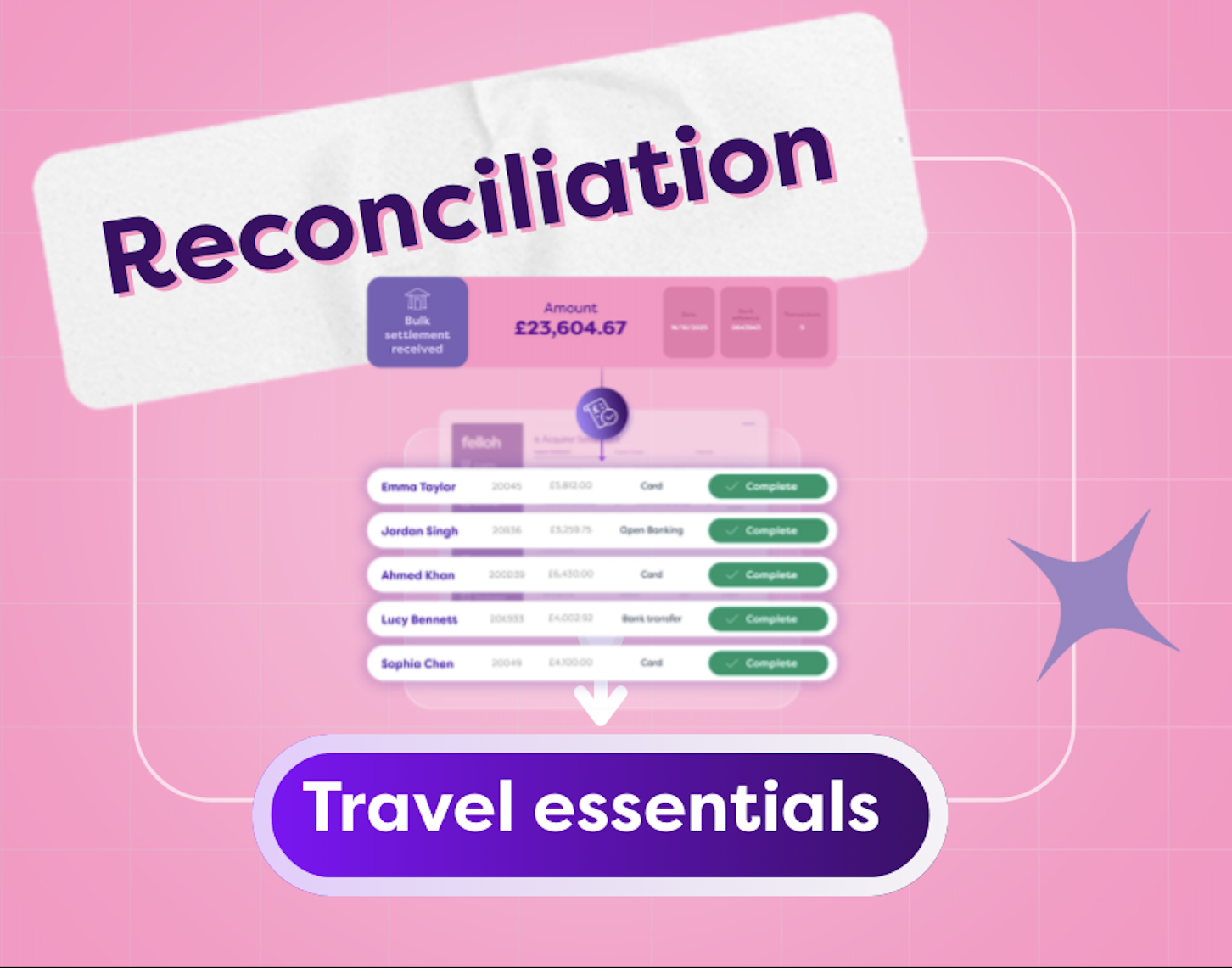
Reconciliation: What it is and why your Travel Business needs it
Why travel operators see a gap between sales records and the bank balance — and the basics of reconciling payments back to bookings.
Read article Updates
Card Payment and Bank Transaction Reconciliation Made Easy for Travel pros
With felloh we make reconciliation of card payments and bank transactions simple.
Read article
Connect the dots.
See how payments, settlement, refunds and reporting evidence connect around every booking.