
Localisation in payments is the practice of adapting the payment experience to local language, currency, payment methods and regulation so the customer pays the way they pay at home. Done well, it lifts conversion in each market; done badly, it leaks revenue on every checkout. It covers everything from currency presentation to compliant authentication flows to locally familiar alternative payment methods.
Travel payments glossary
Localisation
Adapting the payment experience to local language, currency, methods and regulation.
Why it matters in travel
Travel is one of the most market-localisation-sensitive sectors: a UK operator selling into Germany without SEPA or SOFORT, or a US operator selling into the Netherlands without iDEAL, will visibly underperform. Every new market changes the optimal payment mix.
Localisation is also more than language and currency. A booking flow that uses the customer’s expected payment method, authentication pattern and refund-policy framing converts materially better than one that simply translates the text. The localisation depth that works is the depth that matches local customer expectations end-to-end.
The travel businesses that localise well treat each new market as a payment design problem, not a translation problem. The businesses that translate and call it localisation underperform in every market they enter and rarely know why.
How felloh helps
felloh keeps localised payment activity tied back to a single booking ledger so adding a new market or method does not fragment the finance picture.
The pay checkout supports localised payment methods, languages and currency presentation by market, while the dashboard’s Transactions, Settlement and Refunds views treat every method the same way against the booking. Risk Analysis surfaces conversion and dispute patterns by market so localisation decisions can be measured against real outcomes.
For travel businesses expanding into new markets, adding the local payment mix becomes an integration decision rather than a finance-stack decision. The booking-level picture stays single, and the conversion lift in each market is visible against the cost of supporting it.
Where this shows up in payment collection.
Localisation touches more than one workflow at felloh. Start with the pages most travel teams reach for next.
- Payment Collection
Card, open banking, payment links, deposits and instalments — captured against the booking.
Explore - Payment Links
Shareable, authenticated payment links so customers pay against a specific booking without keying card details.
Explore - Embedded Checkout
Booking-aware checkout that keeps card data out of your systems and the payment trail tied to the booking.
Explore
More on collecting payments in travel.
Real-world context from the felloh team and customers, written for travel finance and operations.
 Updates
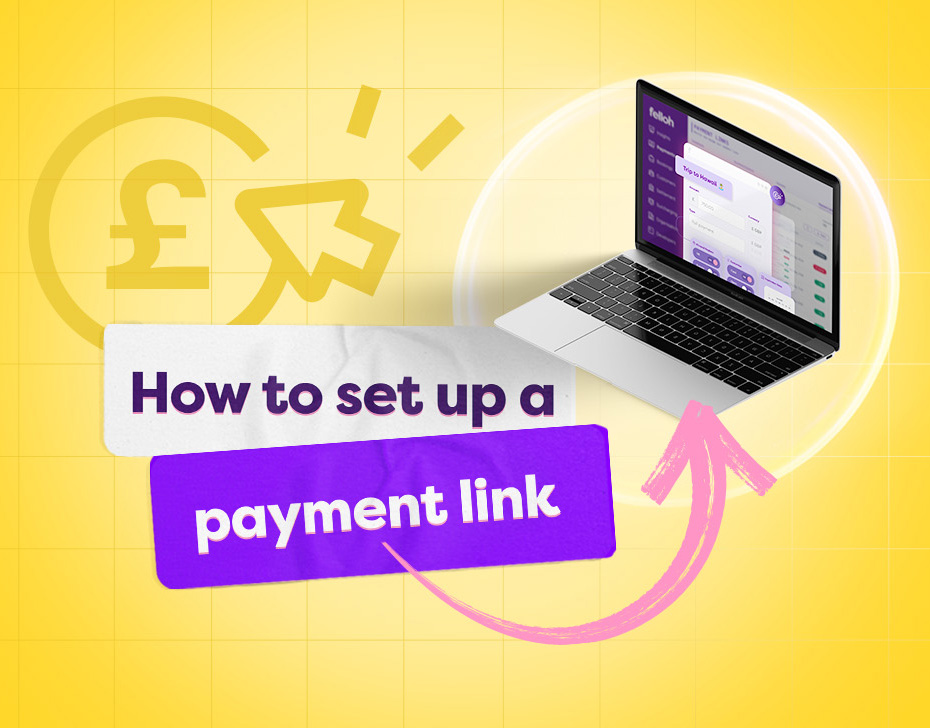
Setting up payment links manually
See how felloh connects all of your payments, cards, open banking and direct deposits with your bookings
Read article Updates
Making multi channel payments work across travel systems
Multi-channel friction in travel usually sits between booking, payment and finance systems. Connected payments keep finance teams in control.
Read article
Connect the dots.
See how payments, settlement, refunds and reporting evidence connect around every booking.