
An authorisation hold places a temporary block on funds in the cardholder’s account when a payment is authorised but not yet captured. The funds are reserved against the card limit but do not move until the merchant captures the transaction, and the hold expires after a set number of days if no capture happens. Pre-authorisations on hotel rooms, hire cars and deposits are the most common consumer-facing examples.
Travel payments glossary
Authorisation hold
A temporary reservation of funds on a card before the merchant captures the payment.
Why it matters in travel
Travel uses holds whenever the final amount is not known at the point of sale or when funds need to be reserved against a deposit before the balance is captured later. Holds that linger past their expiry create customer frustration when a card balance still shows the blocked amount, and they create operational risk if the booking is captured against an expired hold.
For travel customers, an unresolved authorisation hold is more visible than most operational errors. The customer sees the amount blocked on their card balance, sometimes for days or weeks, even after the underlying booking has settled or the hold has expired. Each one becomes a customer-support call about money the operator has not actually taken.
The travel businesses that handle holds well track open holds at the booking level and resolve them automatically — releasing on expiry, converting to capture when the booking firms up, and surfacing anything that has lingered too long. The businesses that do not track them carry a quiet stream of customer complaints about phantom charges.
How felloh helps
felloh tracks hold and capture state at the booking level so finance and operations can see what is reserved, what has captured, what has expired and what needs to be re-authorised before a balance falls due.
The Transactions and Scheduled Payments views surface every open hold against the booking it belongs to, with the expiry date and the captured amount visible inline. Where a hold needs refreshing before a supplier deadline, felloh can re-authorise automatically against the tokenised card and update the booking record without manual intervention.
For finance teams previously dependent on customer complaints to find lingering holds, the picture is now proactive. Holds resolve themselves where they can, and the genuine exceptions surface as actionable items rather than support tickets.
Where this shows up in risk and disputes.
Authorisation hold touches more than one workflow at felloh. Start with the pages most travel teams reach for next.
- Financial Control
Control refunds, exceptions, supplier exposure and payment risk against the same booking record.
Explore - Financial Protection Data
Authentication, settlement, protected funds and refund history kept with the booking for dispute defence.
Explore - Payment Optimisation
Acceptance, decline and authentication evidence so you can act on the patterns that matter.
Explore
More on payment risk and disputes.
Real-world context from the felloh team and customers, written for travel finance and operations.
 Updates
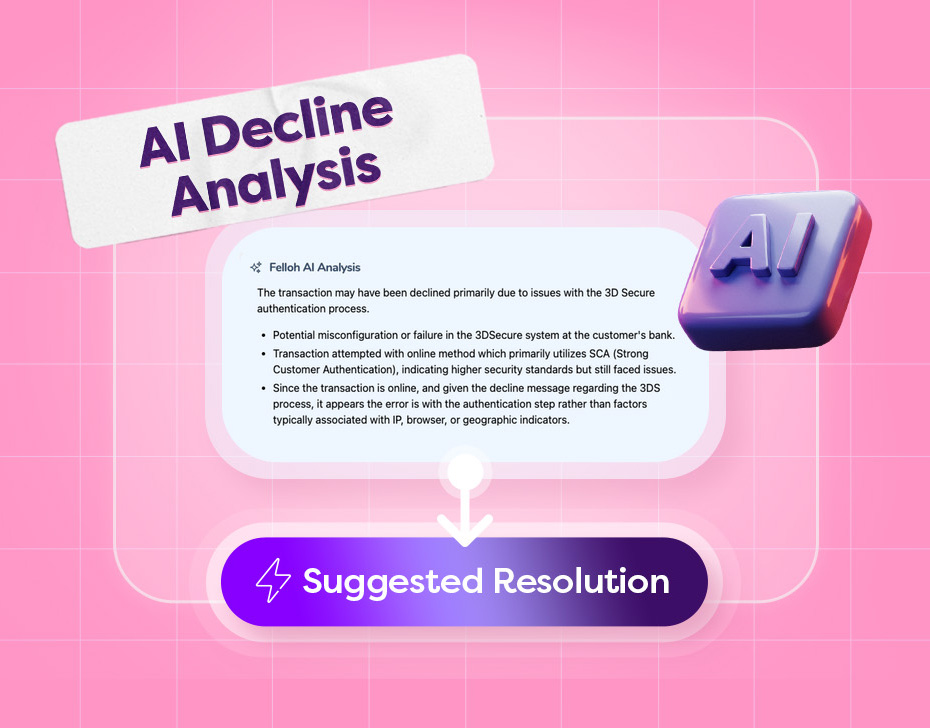
Enhance Your Payment Success with felloh's AI Decline Analysis for the Travel Industry
felloh's AI Decline Analysis surfaces real-time insight on why card payments fail and the best next step — for higher acceptance on travel bookings.
Read article Insights
Minimising Payment Risks of phone payments: The Smart Way for Travel Merchants
Phone bookings are still essential in travel, but they carry payment-security risk. How to keep last-minute trips moving without exposing the business.
Read article
Connect the dots.
See how payments, settlement, refunds and reporting evidence connect around every booking.