Recently, we hosted a joint webinar with Spark Travel to talk about something most growing travel businesses experience, but few talk about early enough: the moment when growth starts creating more operational strain than opportunity.
It is an exciting time to be in travel. New markets are opening, customer expectations continue to evolve, and businesses are finding new ways to grow even in uncertain conditions. But growth brings its own pressure.
What often gets overlooked is that the processes which helped a business reach its current stage are rarely the same ones that will support the next stage.
Spreadsheets, workarounds, manual reconciliation, and “the one person who knows how it all works” can hold things together for a while. But eventually, volume increases, complexity rises, and the cracks start to show.
The challenge is rarely a lack of ambition. More often, it is a lack of operational structure.
At felloh, we spend a lot of time working with finance and operations teams across travel businesses, and the same pattern appears again and again: businesses do not struggle because demand slows, they struggle because their systems cannot keep pace with the business they have already built.
This was the focus of our recent conversation with Simon Wilkinson, Founder and CEO of Spark Travel, where we explored what operational maturity really looks like, and why getting there matters more than ever.
Growth does not create problems, it exposes them
One of the earliest warning signs is usually not dramatic.
It starts with rework.
A booking change affects multiple places. Information gets entered twice. Teams rely on side documents instead of the main system. Finance needs to manually check whether payment records match bookings. Refunds create confusion. Visibility starts to disappear.
As Simon described during the session, the issue is not necessarily the spreadsheet itself. The problem is that the workflow becomes too fragile for the level of complexity the business is now managing.
This becomes particularly visible as booking volumes increase.
When you are handling ten bookings a week, you can often manage through familiarity. You know the customers, the context, and where the money should be. At one hundred bookings a week, that stops being realistic.
The real risk becomes visibility.
If £100,000 lands in your account, that does not necessarily mean everything is balanced. Refunds happen. Chargebacks happen. Delayed payments happen. Customers amend bookings. Suppliers move timelines.
Without clear operational visibility, finance teams are left trying to reconstruct the truth after the fact.
That is where growth becomes expensive.
Why businesses delay fixing it
Most founders know when something is starting to break.
The question is usually not whether change is needed, but why it gets delayed.
Cost is part of it, but rarely the whole story.
The bigger issue is uncertainty. There is also the fear of choosing badly.
Teams worry about spending months evaluating systems, migrating data, and changing workflows, only to discover they still have not solved the real problem.
During the webinar, one attendee shared that their last reservation system migration took five years to be fully completed, with Covid landing in the middle of the process and stretching the transition even further. The idea of starting again with a new platform felt daunting, even if the current setup was holding the business back.
That is the reality for many established travel businesses.
In travel, migration is never clean because the product itself has a long lifecycle. You are not just replacing a checkout for shoes, you are managing live bookings that may still be months away from travel, supplier commitments already in motion, and customer journeys that cannot simply be paused while systems catch up.
This is exactly why operational change gets delayed. Not because teams do not see the problem, but because the risk of disruption feels bigger than the cost of staying where they are.
The four stages of operational maturity
During the webinar, we introduced four common stages of operational maturity we see across travel businesses.
1. Survival
This is where operations are held together manually.
Disconnected spreadsheets, reactive decision-making, and heavy reliance on individual knowledge are common. Teams are solving problems for the first time as they happen, often without repeatable processes.
2. Structure
Patterns begin to emerge.
Businesses start introducing systems, documenting processes, and creating more consistency. But silos also begin to form. Different teams may build their own workarounds, and duplication of effort can start creeping in if systems and ownership are not aligned.
3. Scale
This is where systems start working together.
Booking platforms, finance systems, and payment infrastructure begin to connect. Automation removes manual handoffs. Teams gain operational visibility and can make decisions based on shared information rather than fragmented reporting.
4. Optimisation
The focus shifts from fixing problems to improving performance.
This is where predictive insight, continuous improvement, and more advanced automation become meaningful. AI often enters the conversation here, but only because the foundations underneath it are already stable.
Importantly, this is not a straight line.
Businesses move in cycles. Optimisation creates growth, growth creates new complexity, and the process begins again.
Automation is not the first answer
Adding more software does not automatically create operational maturity.
Many businesses in stage two already have systems in place. The issue is not the lack of tools, it is that the gaps between them are still being managed manually.
Duplicate data entry. Spreadsheet bridges. Manual status checks. Different departments working from different versions of reality.
This is the point where integration becomes more important than introducing another platform.
It is also worth recognising that a business rarely sits neatly in just one stage of operational maturity.
Different parts of the same company can be operating at very different levels of maturity. Sales and customer-facing teams may be highly optimised and focused on growth, while finance or back-office operations are still relying on manual workarounds and disconnected processes.
This often becomes the hidden barrier to scale.
If all investment is focused on driving more sales and improving frontline delivery, but the back office is never reviewed, the real constraint may not be demand at all. It may be the operational strain sitting behind the scenes, where finance, reconciliation, reporting, and fulfilment are struggling to keep pace.
A business usually moves at the speed of its least mature function.
The best automation is usually not ambitious, it is targeted.
It removes repeatable, low-value manual effort. It improves consistency. It reduces reliance on individual memory. It helps sales, operations, and finance work from the same picture.
That is where scale becomes sustainable.
AI should come last, not first
No conversation about operations in 2026 avoids AI.
But one of the strongest points from the session was simple: businesses should not start with AI.
They should start with clarity.
If workflows are unclear and data is inconsistent, AI does not create efficiency, it creates faster confusion.
AI is a very good guesser. That is useful in the right place, but dangerous in the wrong one.
Before introducing customer-facing AI, test it internally first. Use it where your team already knows what “correct” looks like. Build confidence there.
More importantly, ask the right question.
Not “How can we use AI?”
But “Where do we have a real operational problem that AI is actually the best tool to solve?”
In many cases, stronger process design, better integrations, and clearer ownership will create more value than AI ever could.
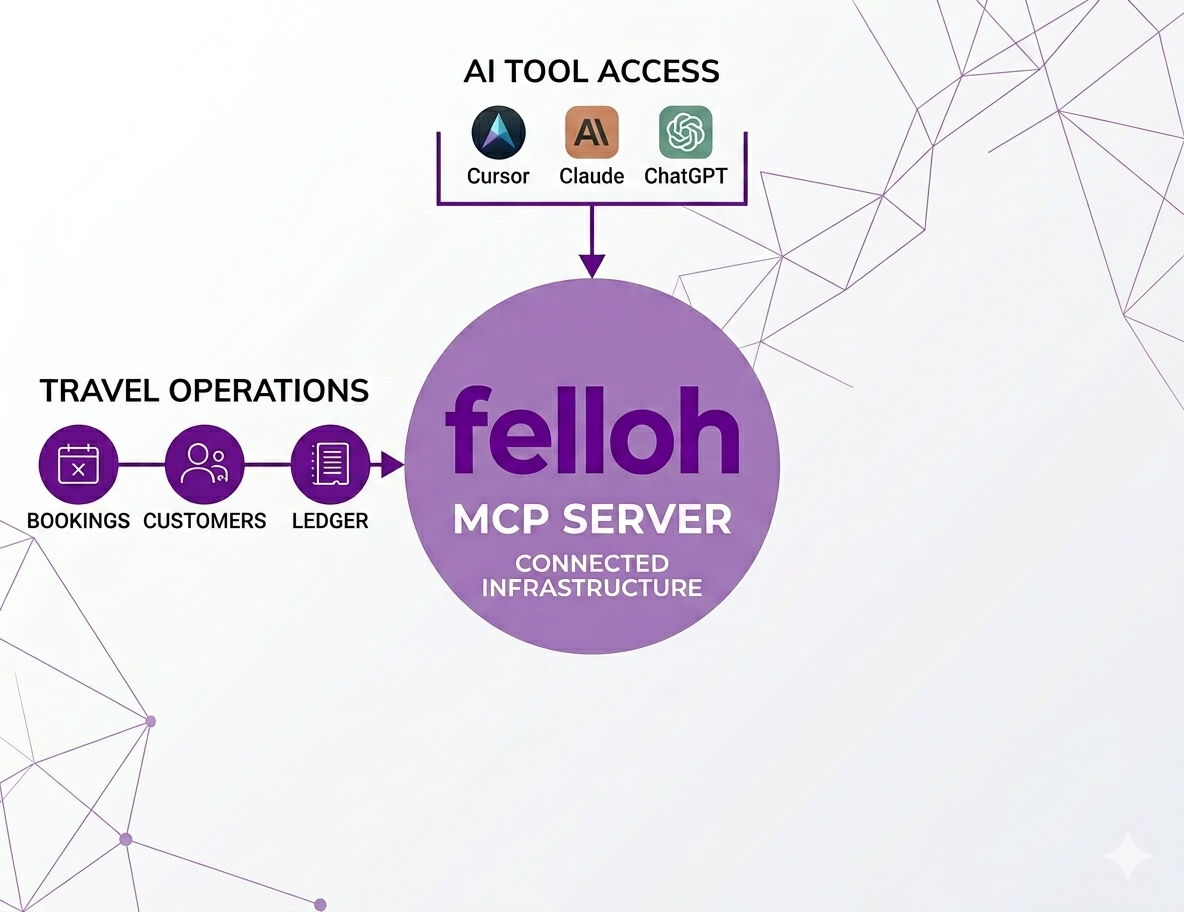
Particularly for clearly defined, repeatable operational tasks, the best use of AI may not be to run the process itself, but to help build the automation around it faster. In many cases, AI is most useful in producing the logic, code, or workflow structure needed to remove manual work, rather than replacing the decision-making entirely.
The real value comes from speeding up how businesses move from identifying a problem to implementing a reliable solution, not from handing control to a system that still needs constant checking.
AI works best when it supports good operations, not when it is expected to compensate for bad ones.
What leaders should do next
If there is one practical takeaway, it is this:
Map your current workflow.
Not the ideal version. The real one.
Look closely at where your team says “usually” or “sometimes.”
That is where operational risk lives.
That is where automation often fails, because exceptions were never properly understood.
The businesses that scale best are not the ones chasing the newest technology first. They are the ones disciplined enough to fix the foundations before building on top of them.
Technology should support clarity, not replace it.
Because in travel, growth does not reward complexity.
It rewards control.


.svg)

.png)
.svg)
.svg)







.png)
.png)
.svg)


.png)
.png)
.avif)


.png)


.png)
.png)
.png)


.png)