
Payment scheduling is the practice of setting up future payments to be taken automatically against a booking on agreed dates, rather than relying on the customer or the agent to action each one. In travel, scheduling typically covers staged deposits, balance collection ahead of a balance-due date, instalment plans, supplier release dates and recovery attempts for soft declines. Scheduled payments can run against a stored card token, an open-banking authorisation or a direct-debit mandate, and each rail carries different consent, retry and reporting requirements.
Travel payments glossary
Payment scheduling
Setting up future payments to be taken automatically against a booking on agreed dates.
Why it matters in travel
Travel booking lifecycles are long enough that almost every customer payment story has a scheduled component. Tour bookings made nine months before departure carry a balance schedule. Group and school travel bookings carry per-payer instalment schedules. Cruise bookings carry a low-deposit-large-balance schedule tied to the cruise-line cancellation curve. Without scheduling, finance and operations spend significant time chasing payments by hand, and a missed balance can cascade into supplier-side problems.
The hidden risk in payment scheduling is the consent regime. A scheduled card payment relies on a valid tokenisation event with the right MIT (merchant-initiated transaction) framing; a scheduled open-banking payment relies on a variable-recurring-payment or future-dated payment mandate; a direct debit relies on a DDI under the BACS rules. Get the consent wrong and the customer can dispute, the issuer can decline as a soft decline at the SCA layer, or the regulator can take a view. Travel businesses that treat payment scheduling as a finance operation rather than a compliance operation tend to learn this the hard way.
Done well, payment scheduling moves work from inbox to ledger. Customers know what is happening, finance can see what is collected versus what is queued and what is overdue, and operations can plan supplier payments against expected arrivals rather than guesses. Done badly, it produces a backlog of failed schedules, manual rescheduling and customer-service queries that finance teams spend hours unpicking.
How felloh helps
felloh handles payment scheduling as a first-class part of the booking-level ledger, so each scheduled payment is attached to the booking, traveller and travel date it relates to — and finance can see at any point what is scheduled, what has been collected, what has failed and what is queued for the next attempt.
In the dashboard, Payment Plans and Scheduled Payments expose the schedule against the booking with the right consent evidence captured at setup, so the audit trail behind every scheduled charge is available without rebuilding it. Soft declines surface as actionable exceptions and retry automatically against the schedule rather than disappearing into a finance inbox. Approval links let agents capture customer consent for a new schedule without rebuilding the booking from scratch.
The practical effect for finance is that the cash-position picture stays honest. Scheduled payments show up as committed-but-not-yet-collected cash on the right side of the ledger, with the right consent evidence behind them, and reconciliation matches the schedule to the bank arrival the same way it does for any other payment.
Where this shows up in finance operations.
Payment scheduling touches more than one workflow at felloh. Start with the pages most travel teams reach for next.
- Financial Operations
Reconciliation, settlement, refunds and protected-funds workflows on one booking-aware ledger.
Explore - Automate Reconciliation
Bulk settlements unpacked to fees, refunds and chargebacks; bank transfers matched without references to chase.
Explore - Know Your Cash Position
See received, protected, committed and available cash by booking — without rebuilding the picture from exports.
Explore
More on travel finance operations.
Real-world context from the felloh team and customers, written for travel finance and operations.
 Insights
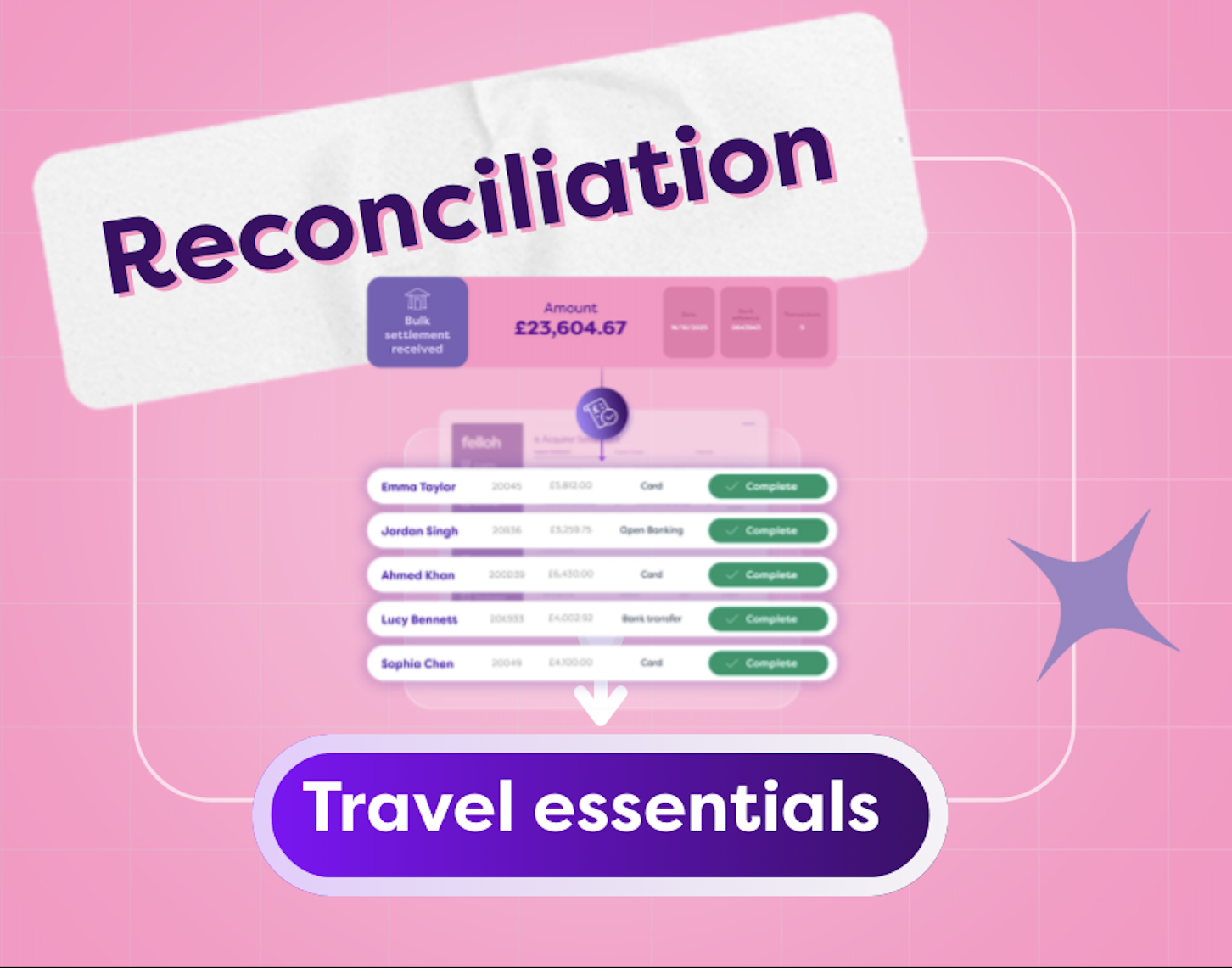
Reconciliation: What it is and why your Travel Business needs it
Why travel operators see a gap between sales records and the bank balance — and the basics of reconciling payments back to bookings.
Read article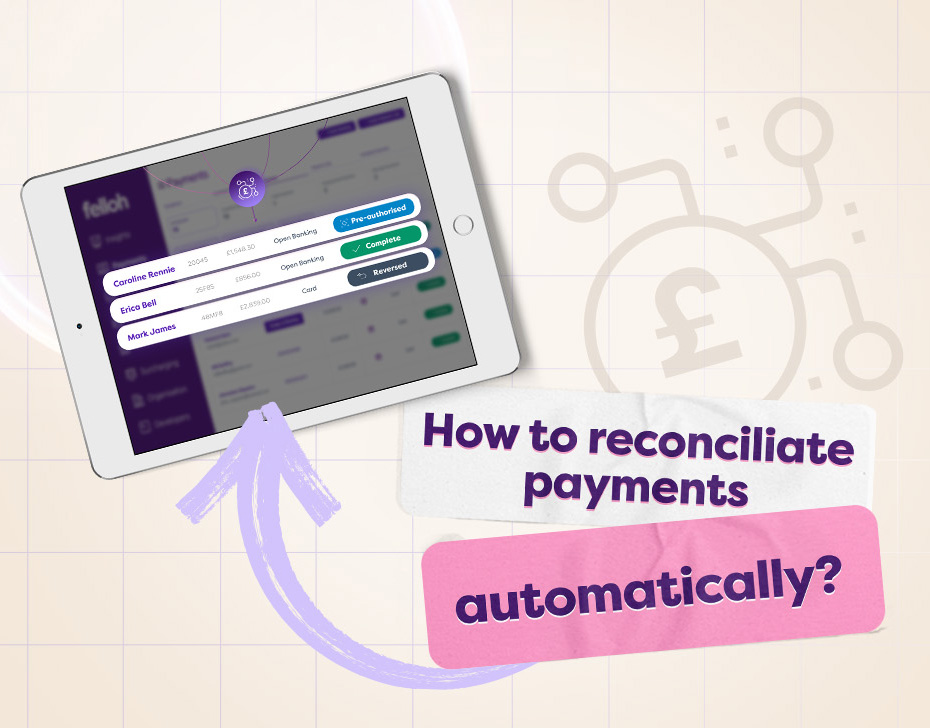 Updates
Card Payment and Bank Transaction Reconciliation Made Easy for Travel pros
With felloh we make reconciliation of card payments and bank transactions simple.
Read article
Connect the dots.
See how payments, settlement, refunds and reporting evidence connect around every booking.