Why Financial Visibility Has Become the Next Competitive Advantage for Travel Businesses
Travel businesses don't lack financial data—they often lack financial visibility. Discover why understanding where cash sits, how it's allocated, and what is genuinely available has become essential for operational control, regulatory confidence, and sustainable growth.
Over the past few months, I’ve had conversations with founders, finance leaders and operational teams across the travel industry.
Different business models. Different markets. Different stages of growth.
Yet the same challenge keeps surfacing - cash visibility!
Ask most travel businesses how many bookings they’ve taken this month, and they’ll have an answer.
Ask how much cash has been received, where it sits, how it’s allocated, what funds are protected, what liabilities have already been committed, and what cash is genuinely available to the business, and the answer often becomes much harder.
That’s not because finance teams lack capability. It’s because the information needed to answer those questions rarely lives in one place.
Growth has made financial operations more complex
The travel industry has become incredibly sophisticated.
Customers expect multiple ways to pay. Businesses operate across different currencies. Deposits are collected months before travel. Suppliers are paid on different schedules. Protection arrangements vary. Merchant acquirers have their own settlement cycles. Finance teams need accurate reporting, while operational teams need real-time visibility.
Each individual system usually does exactly what it was designed to do.
The challenge is everything that happens between those systems.
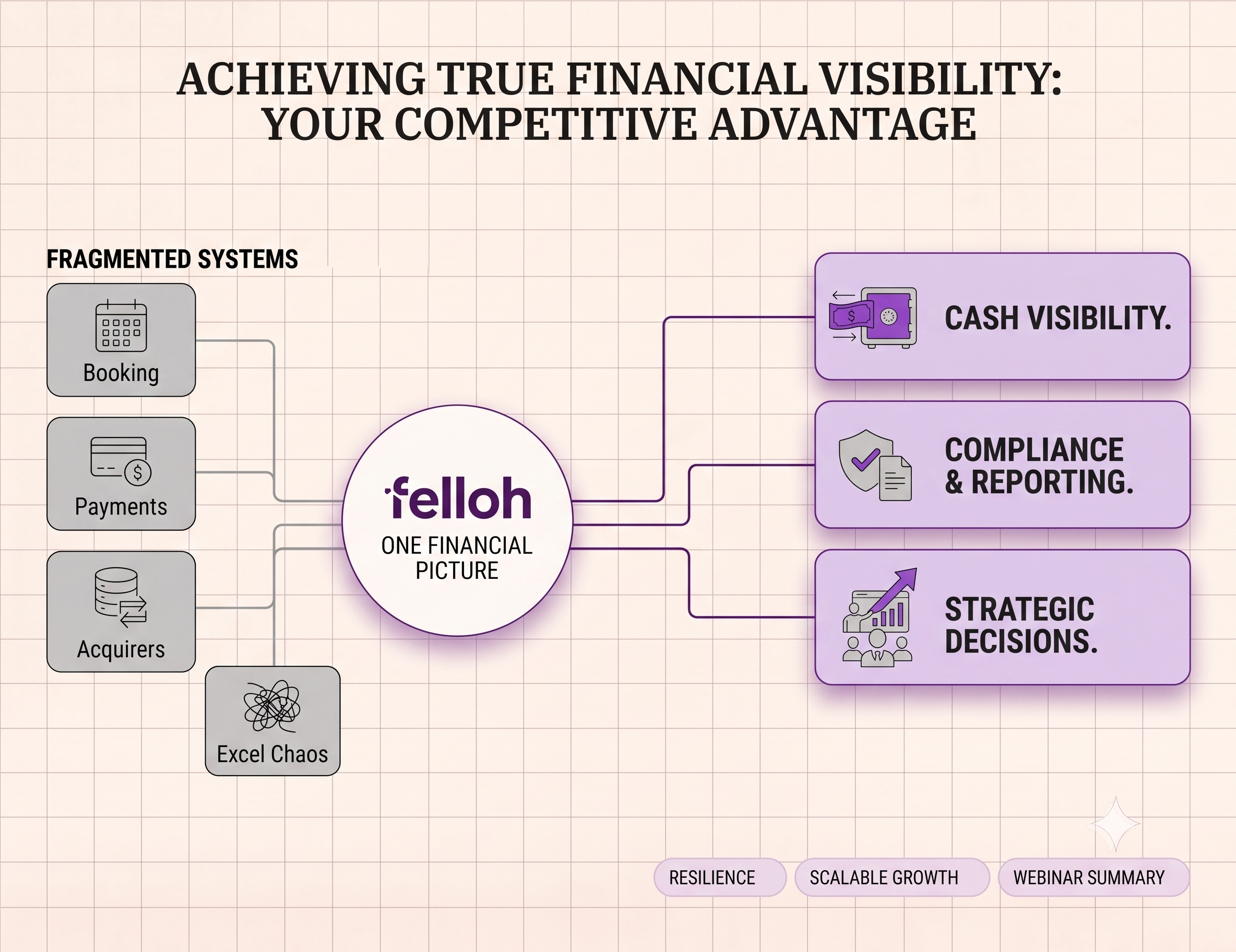
Booking platforms, payment providers, accounting software, trust accounts, merchant acquirers and spreadsheets all hold part of the story.
Bringing those pieces together into a single, trusted view of the business is where many organisations struggle.
Regulation doesn’t create complexity. It exposes it.
One of the most interesting discussions during our recent webinar with Travel Trade Consultancy centred on how regulatory expectations are evolving.
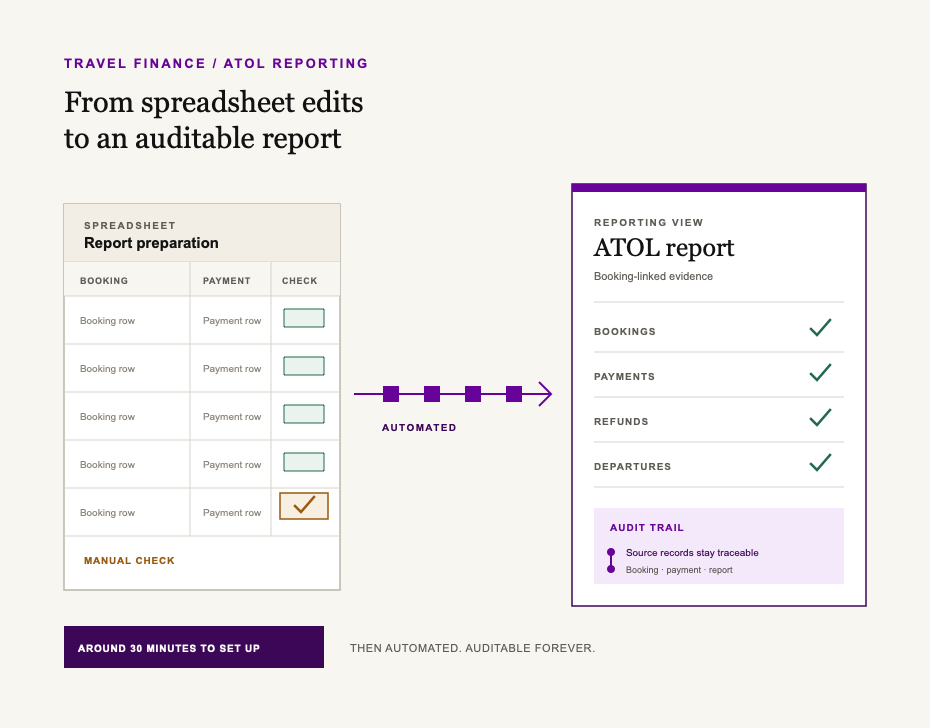
ATOL renewals, trust reporting and financial assessments are often viewed as annual compliance exercises.
In reality, they’re increasingly becoming tests of operational maturity.
Regulators, trustees and insurers aren’t simply asking for financial statements. They want confidence that businesses understand how money moves through the organisation, that reporting is consistent, and that forecasts are built on reliable operational data rather than manual workarounds.
Businesses that rely on disconnected systems and spreadsheet-driven processes can often produce the right answer eventually.
The difficulty is demonstrating confidence in how that answer was reached.
That’s an operational challenge as much as it is a regulatory one.
Finance has become a strategic function
Another point that resonated strongly during the discussion came from Michael Alcock at Travel Trade Consultancy.
He described finance as playing three distinct roles.
First, finance acts as the scorekeeper, ensuring transactions are accurate, reconciliations are complete and the foundations are trustworthy.
Second, finance becomes the organisation’s forecaster, modelling different scenarios, understanding future cash requirements and helping the business prepare for uncertainty.
Finally, finance acts as an influencer, helping leadership teams make better decisions about growth, investment and risk.
None of those roles work effectively without reliable financial visibility.
If the underlying data is fragmented, every conversation about forecasting, resilience or growth starts from a position of uncertainty.
Financial operations deserve the same attention as customer experience
Travel businesses have invested heavily in improving customer journeys over the last decade.
Booking experiences have become smoother. Marketing has become more sophisticated. Digital channels have expanded.
Financial operations haven’t always evolved at the same pace.
Many finance teams still spend significant time manually matching payments to bookings, reconciling settlement reports, updating accounting systems and preparing information for different stakeholders.
The work gets done.
But it often depends on spreadsheets, manual intervention and knowledge held by a handful of experienced people.
That creates operational risk, limits scalability and makes it harder for leadership teams to answer fundamental questions about the health of the business.
Financial visibility is about confidence
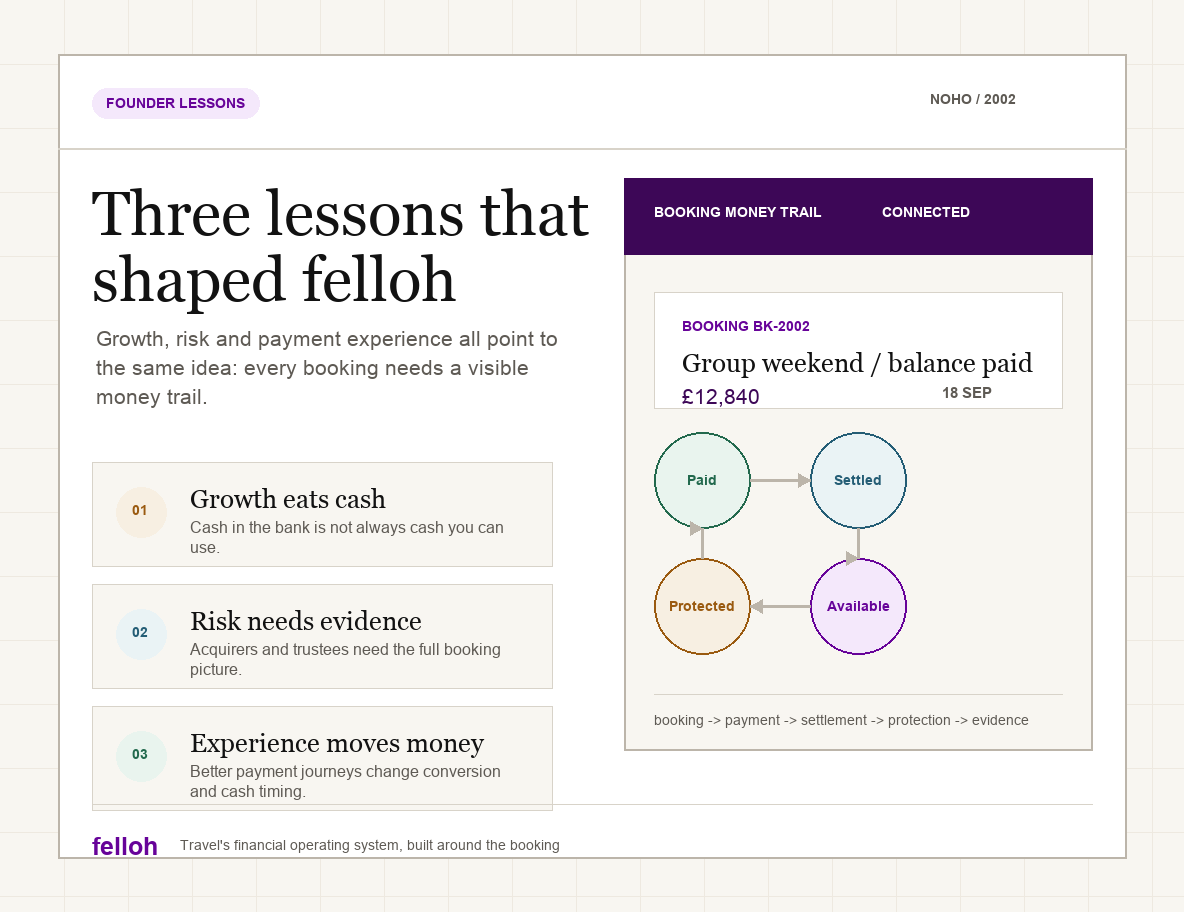
At felloh, we often talk about helping travel businesses understand what cash has been received, protected, committed and available across every booking.
That isn’t simply a reporting exercise.
It’s about giving finance and operational teams confidence in the numbers they’re working with every day.
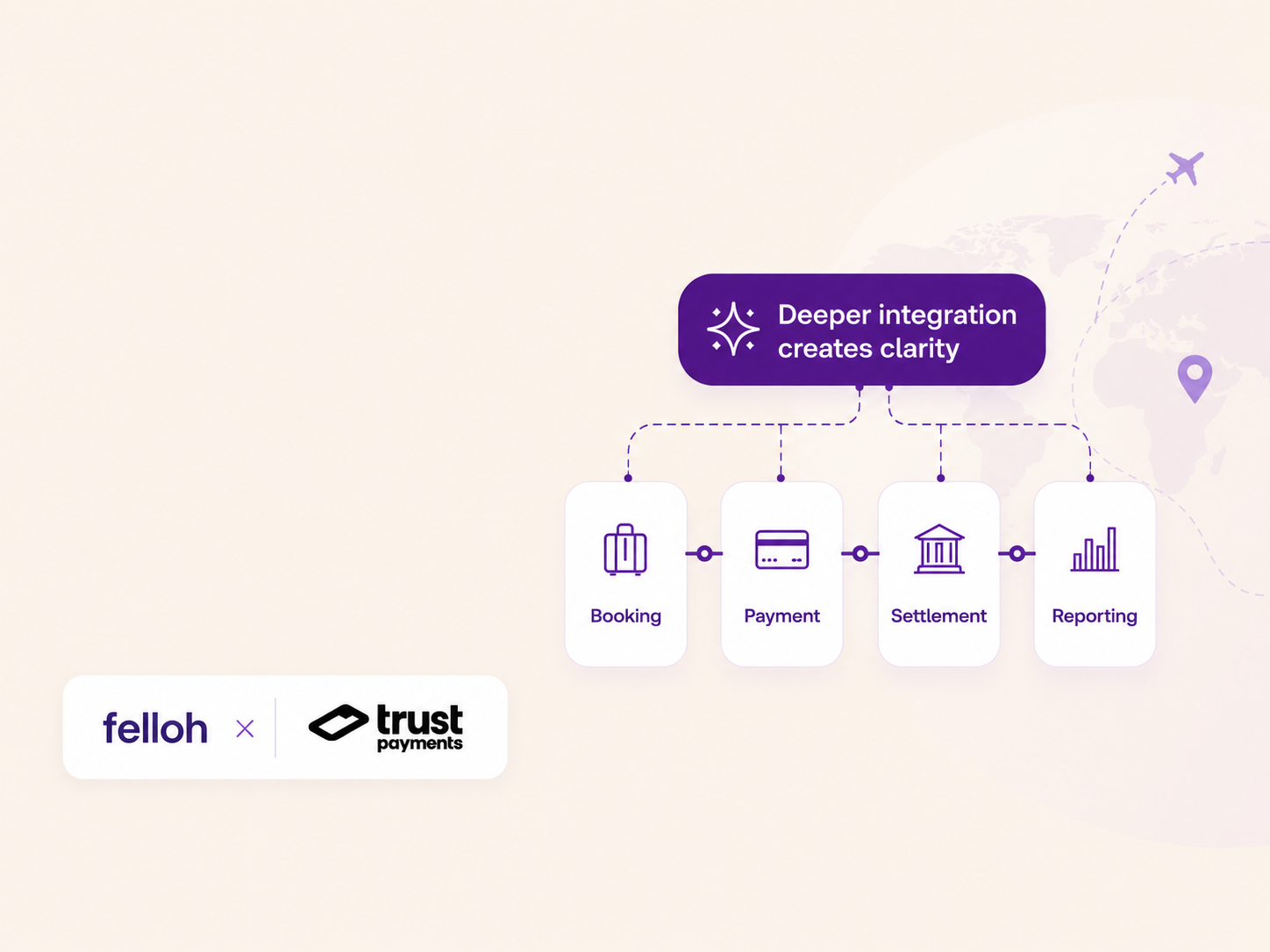
When booking data, payment data and financial data are connected, reporting becomes easier.
Forecasting becomes more reliable.
Conversations with regulators, trustees and auditors become more straightforward.
Most importantly, leaders can make decisions based on a shared, trusted view of how money is flowing through the business.
Financial visibility isn’t just about satisfying compliance requirements.
It’s about building businesses that are more resilient, more scalable and better equipped for growth.
These were some of the themes I recently had the opportunity to discuss alongside Simon Brodie and Michael Alcock from Travel Trade Consultancy as part of the Travel by B Corp webinar series.
If you’d like to explore the discussion in more detail, you can watch the webinar recording here: Recording Link.