
.svg)
Updates
Test Authors
Test Authors

Test Authors


Lorem ipsum dolor sit amet, consectetur adipiscing elit. Suspendisse tincidunt sagittis eros.
Lorem Ipsum is simply dummy text of the printing and typesetting industry.
Lorem Ipsum is simply dummy text of the printing and typesetting industry.


Building for a connected travel stack: introducing felloh SDKs
Lorem ipsum dolor sit amet, consectetur adipiscing elit. Suspendisse tincidunt sagittis eros.
Lorem Ipsum is simply dummy text of the printing and typesetting industry.
Lorem Ipsum is simply dummy text of the printing and typesetting industry.
Making ATOL renewals less painful: practical insights from TTC and felloh
Lorem ipsum dolor sit amet, consectetur adipiscing elit. Suspendisse tincidunt sagittis eros.
Lorem Ipsum is simply dummy text of the printing and typesetting industry.
Lorem Ipsum is simply dummy text of the printing and typesetting industry.
Data connectivity isn’t an IT project. It’s the whole game.
Lorem ipsum dolor sit amet, consectetur adipiscing elit. Suspendisse tincidunt sagittis eros.
Lorem Ipsum is simply dummy text of the printing and typesetting industry.
Lorem Ipsum is simply dummy text of the printing and typesetting industry.
.png)
Building for a connected travel stack: introducing felloh SDKs

Making ATOL renewals less painful: practical insights from TTC and felloh
.png)
Data connectivity isn’t an IT project. It’s the whole game.
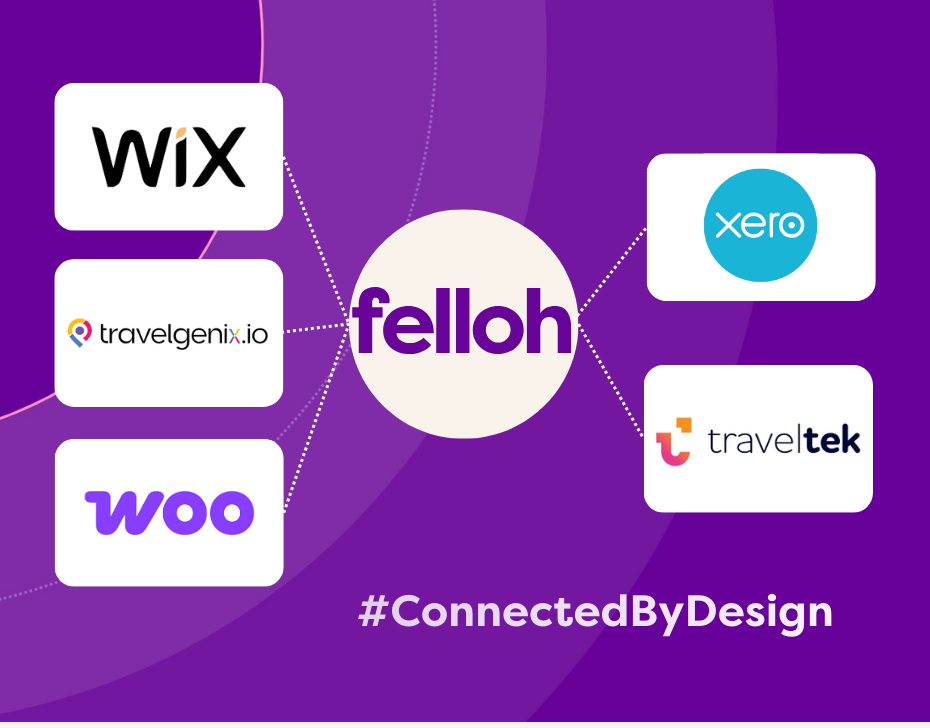
Making multi channel payments work across travel systems
Making multi channel payments work across travel systems
.png)
Why Growing Businesses Struggle to Scale Finance Operations
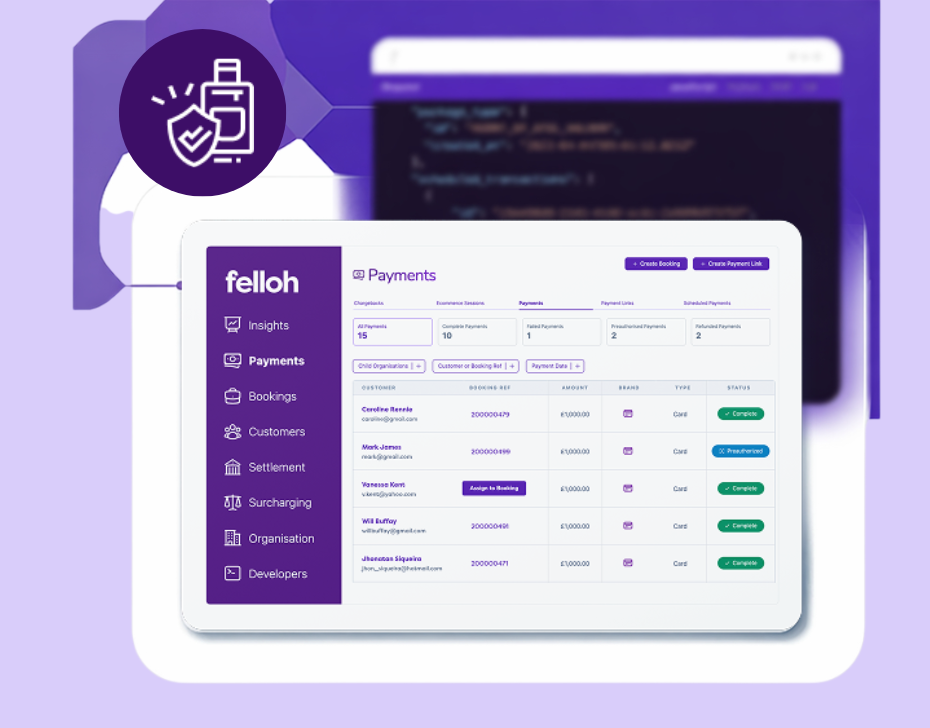
When Fraud Prevention Becomes a Growth Problem
.svg)
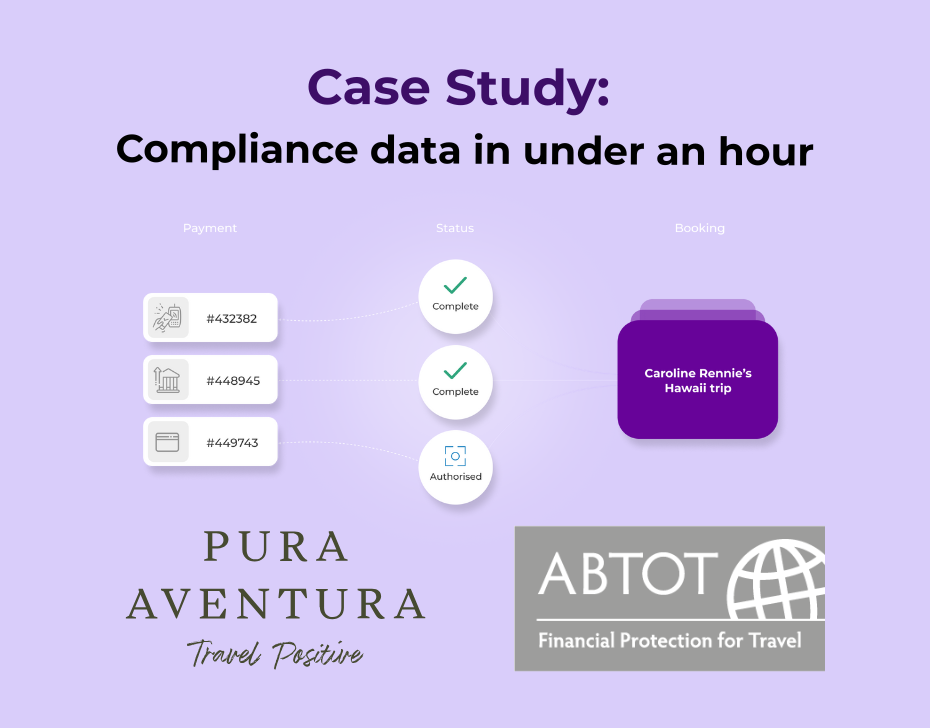
Case Study: How Pura Aventura secured ABTOT-ready compliance data – in under an hour
.svg)


NEWS & RESOURCES
We love sharing our travel expertise, so we're always creating new resources to help travel businesses succeed.


We love sharing our travel expertise, so we're always creating new resources to help travel businesses succeed.
.png)

.png)
Insights

In travel, managing payments can be a complex and time-consuming task. From dealing with acquirers (payment processors) to handling various card types and repeat customers, there are numerous challenges that travel businesses face when it comes to payment processing. However, by implementing the right strategies and leveraging the power of data, you can streamline your payment operations, reduce risk, and ultimately, boost your bottom line.
.png)
1
Automate your manual tasks with AI-powered Software as a Service
You don’t need in-house AI tools to do this, most software providers will be doing the heavy lifting for you
2
Step up your SEO and AI Optimisation (AIO) strategy
Make sure your experiences are easily discoverable in consumer-generated itineraries. If you’ve invested in search engine optimisation (SEO) in the past, a lot of that work will be paying off now, but if not, it’s never too late to tag your images, set meta descriptions and make sure your most important content is machine readable.
3
Experiment cautiously with customer facing AI tools
If you’re not yet using any AI in your business, now is not the time to rip out your search function on your website and replace it with an AI chat bot! As an end consumer you probably know how frustrating it can be to deal with a poorly trained bot. Instead, find a problem you have which is worth solving but not business critical to start learning in a low-risk environment.
blog
Insights



In travel, managing payments can be a complex and time-consuming task. From dealing with acquirers (payment processors) to handling various card types and repeat customers, there are numerous challenges that travel businesses face when it comes to payment processing. However, by implementing the right strategies and leveraging the power of data, you can streamline your payment operations, reduce risk, and ultimately, boost your bottom line.
When working with acquirers, it's essential to provide them with accurate data on your exposure – the amount of customer money you have that has not yet travelled and is not insured. By sharing this information, acquirers can assess your actual risk and offer terms that better fit your specific situation, rather than relying on industry averages. This approach can lead to more favourable terms and a better working relationship with your acquirer.
Understanding the types of cards your customers use can provide valuable insights into your payment processing costs. If you have a high proportion of international or corporate cards, you may be able to recover your costs by implementing a surcharge, where allowed. Alternatively, you can encourage customers to use personal cards, which typically have lower processing fees. By analysing your customer card data and making informed decisions about surcharging, you can optimise your payment costs and improve your bottom line.
In the travel industry, it's common for customers to make multiple payments for a single booking, such as a deposit followed by balance payments. Additionally, many travel businesses have a high percentage of repeat customers. By securely saving customer card details, you can streamline the payment process for both your customers and your staff. This approach not only saves time but also reduces the risk of manual entry errors and enhances the overall customer experience.
One way to streamline your payment processes is by using payment links instead of taking payments over the phone. By sending payment links to your customers, you can reduce the time your staff spends on manual payment processing and minimise the risk of errors. To gauge the effectiveness of this approach, it's crucial to test and measure the success of the change. Collect data on how many customers use the payment link option and analyse the time savings and efficiency gains. You may be surprised by the results and the potential for freeing up your staff to focus on building relationships with customers.
Connecting your payment data to your booking data is a powerful way to streamline your operations and reduce manual entry errors. By integrating these two data sources, you can automatically update your booking system as soon as a customer makes a payment, sending alerts to agents to progress the booking. This approach not only saves time but also provides a more seamless experience for your customers, as their booking information is updated in real-time.
Implementing these strategies can help travel businesses optimise their payment processes, reduce risk, and improve their bottom line. However, navigating the complexities of payment processing can be challenging, especially when your core focus is on delivering memorable holidays not optimising payments..
That's where Felloh comes in. We are experts in payments and specialise in helping travel businesses streamline their payment operations and unlock the full potential of their financial data. Our platform offers a range of features designed to address the challenges of travel payments, from automated reconciliation and surcharging to secure card storage and seamless data integration.
If you're ready to transform your travel payment processes and take your business to the next level, we invite you to book a meeting with one of our experts.
We'll discuss your specific needs, challenges, and goals, and show you how Felloh can help you optimise your payment operations, reduce costs, and improve your customer experience.








.png)
.svg)

.avif)
