When most travel businesses compare payment providers, they start with the headline rate. It is the most visible number, it is the one every acquirer advertises, and it is usually the first thing finance teams plug into their spreadsheets.
But payment pricing is far more layered than most people realise, especially in travel where card mixes are complex and international customers are common. A low-looking rate on paper can become surprisingly expensive in practice.
This article breaks down the key elements that influence your true processing cost, helping you understand what to look for and how to assess whether you are genuinely getting value, regardless of who your acquirer is.
Why headline rates are only one piece of the puzzle
Acquirers often lead with an attractive number:
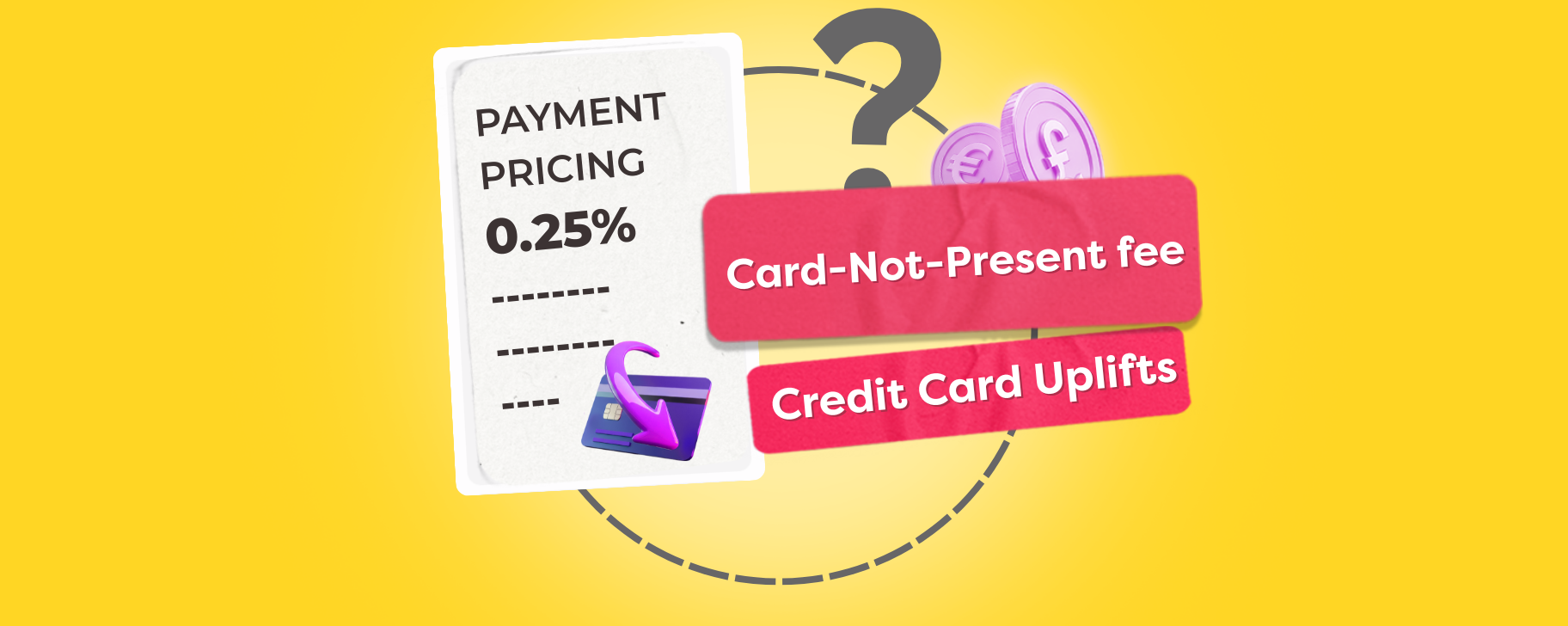
“0.25 percent on Mastercard debit” or “0.69 percent for credit cards.”
These sound amazingly competitive, but they rarely represent what businesses actually pay. That is because the headline rate only applies to a subset of your transactions and excludes the additional fees layered on top.
Common examples include:
1. Card-not-present uplifts
Look out for these in any acquiring offer. A Card-not-present fee will impact all online and MOTO transactions, often around +0.30 percent, even when using 3D Secure. In travel, the vast majority of payments fall into this category, which means the headline debit rate applies far less often than owners assume.
2. Credit card uplift
Another common trend is to have a disproportionately higher credit card rate than debit card rate - especially on domestic personal cards. The headline “0.25%” on debit will be accompanied by 0.69 percent for credit cards. Compounding with the Card-not-present uplifts, your credit card fees can quickly move closer to 0.99 percent once all associated fees are added.
3. International and commercial cards
Travel businesses serve global customers, group organisers, and corporate buyers, which means international and corporate cards are common. These are charged at a higher rate as international and corporate interchange is not regulated in the same way as domestic interchange is.
The combined effect can be significant.
A rate that appears cheaper at first glance may end up considerably higher once you apply real-world usage.
Your card mix matters more than the headline number
The type of cards your customers actually use has a bigger impact on your total cost than the published rate.
Many travel businesses assume most sales are on low-fee domestic debit cards. In reality, it is common to see the majority of transactions processed on:
- credit cards,
- international cards,
- commercial or corporate cards,
- or cross-border payments.
These categories all carry higher fees.
Two businesses with the same headline rate can end up with entirely different overall costs simply due to their card mix. Understanding that mix is the first step toward understanding your true payment cost.
How to evaluate your real cost of payments
Whether you work with Barclays EPDQ, Worldpay, Global Payments, Stripe, or another acquirer, the framework for evaluating pricing is similar.
1. Base rates vs applied rates
Look at what you are actually charged per card type, not just what is advertised. Applied rates almost always diverge from the marketing rates.
2. Uplifts and surcharges
Pinpoint the uplifts that drive costs, such as:
- card-not-present fees,
- international uplifts,
- commercial card fees,
- scheme fees.
3. Card mix and transaction patterns
Analyse the percentage of debit, credit, international, and commercial cards each month. This explains most unexpected cost increases.
4. Total cost per £1 million processed
This metric cuts through complexity. It shows your true cost once everything — all fees, all mixes, all uplifts — is accounted for.
Clarity comes from looking at the whole structure, not a single number.
Where a partner adds value
This is the part that many travel businesses say they struggle with. Statements vary by provider, the terminology is inconsistent, and cost structures are not always easy to interpret.
Our role is not to replace your acquirer, but to help travel businesses:
- understand how their pricing works,
- identify where they may be overpaying,
- and optimise their setup without unnecessary complexity.
Because we work across the travel sector, we see the same patterns, the same uplifts, and the same hidden charges appear again and again. We also offer tools, such as automatic surcharging on international cards, that help offset some of the unavoidable cost pressures unique to travel.
Ultimately, the biggest value we bring is clarity. When pricing becomes easier to understand, it becomes something you can manage proactively rather than something that simply happens around you.
Want a more detailed breakdown?
We have put together a short, practical guide that builds on the themes in this article and walks through:
- the full anatomy of payment pricing,
- how to analyse your card mix,
- where hidden costs typically appear,
- and how to calculate your true cost per £1m processed.
You read it here: The Travel Business Guide to Understanding Payment Pricing



.svg)

.png)
.svg)
.svg)




.png)
.png)
.png)



.svg)



.png)
.avif)


.png)


.png)
.png)
.png)